
Adventure Blog
Discover tips, experiences and guides for your next adventures
Categories
- Andinismo
- Barranquismo
- Blob Jump
- Buceo
- Canopy
- Canotaje
- Ciclismo
- Consejos
- Deportes de aventura
- Destinos de Aventura
- Entrevistas
- Escalada
- Esqui
- Festivales
- Flyboard
- Infografías
- insight de aventura
- Kite Surfing
- Leyendas de aventura
- Longboard
- Noticias de Aventura
- Otros deportes
- Parapente
- Puenting
- Sandboard
- Slackline
- Surf
- Todo Terreno
- Trail Running
- Trekking
- Ultramaratón
- vaa
- Video de Aventura
- Wakeboarding
- WakeSkate
- Windsurf
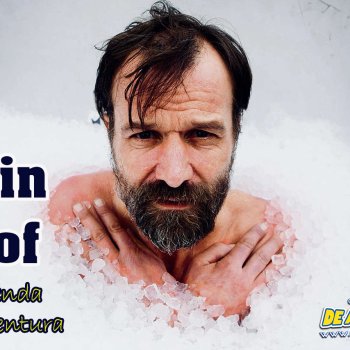
Win Hof: The Iceman
Many extreme athletes often repeat a phrase every time they achieve an important feat: "The power is in the mind." While it is true that the mind and body work together, the legendary Win Hof demonstrates that mental power goes far beyond imagined limits. Photo: Red Bull Win Hof, also known as the Iceman, has an immense mental control, can regulate his body temperature with total skill, and has managed to run a half marathon barefoot on snow in Finland, immerse himself in an ice bath for almost 2 hours, and climb Everest in shorts and boots only. Photo: Red Bull Hof was born on April 20, 1959, in the Netherlands and to date holds 20 "Guinness World Records" for enduring extreme temperatures. According to him, it all started at 17 when he became interested in cold water. Since then, he changed his breathing pattern, managing to hold his breath for 5 to 7 minutes under ice after months of training. Photo: Locosdeldeporte 'The Iceman' claims to feel heat through the mind and breathing. His mind causes his cells to produce up to 300% more metabolic activity, without any movement. Thus, Hof uses mental control as the only tool to achieve his feats. Photo: nrc.nl Cold has not been the only barrier Wim has overcome with his mental power. In Namibia, he ran a marathon without training and without drinking a single drop of water during the race. But most surprisingly, his body maintained a temperature of 37 degrees. Photo: Dailymotion How does Hof explain all this? "If you have control of the nervous system, it will produce a large amount of dopamine that will reduce the sensation of pain. The body is prepared to reach extremes, but you have to learn to control it." We imagine that many adventurers will want to try Wim's method, for all of them, Hof recommends starting by taking a cold shower after a hot one, as well as breathing more than you feel is necessary. Photo: Red Bull And adventure athletes? All adrenaline lovers seek deeper control. Many do not know it, but they are doing it, controlling their minds while they act. Action sports specialists are people who seek their deepest inner or spiritual depth through extreme activities.

How to choose your bike according to your size.
Cycling is one of the sports with the greatest growth, development, and organization in Peru. Many people are joining this trend and are looking to acquire a new bicycle; for all those who are thinking of starting in this sport, they must take into account that when buying a bicycle, choosing the correct size is very important, as this will lead us to enjoy the handling more, have greater comfort, and achieve better performance; Additionally, we will avoid pain and injuries during handling. Photo: evistaazimut Often, the height of the cyclist is considered a determining factor; while it can provide a reference for the size, it is more important to consider the inseam and forearm measurements when choosing the correct bike size. Photo: Tux.at The size of the mountain bike is usually expressed in inches, with the most important measurement being the height of the seat tube, which determines the rest of the frame dimensions and the bike size. Photo: rompiendoreglas.com In the case of a road bike, the size is usually expressed in centimeters, again taking the vertical tube of the frame as the most important measurement. Photo: rompiendoreglas.com Urban bikes should be more comfortable, allowing for a more upright posture, with the handlebars positioned above the saddle. This setup also allows for comfortable foot placement on the ground, as stops due to traffic or pedestrians will be more frequent. Photo: rompiendoreglas.com Although it is possible to conduct a detailed study of the size and positioning on the bike, here we will show you a way to determine the size and adjustment of the bike using only two measurements: Inseam measurement. Forearm measurement. Photo: Solobici.es It is important to consider that the size of the bike may vary between two different manufacturers, as some measure the size from the pedal axis to the seat tube, while others measure it to the center of the top tube, resulting in a difference of more than an inch from one manufacturer to another. Many manufacturers label their bike sizes using letters; it is usually easy to access the manufacturer's website to obtain the equivalences of their letter sizes with the measurements of the vertical tube that determines the actual size.
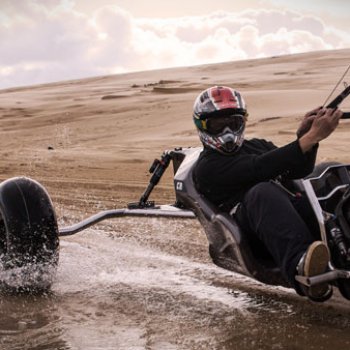
Kite Buggy: Full speed ahead on wheels.
If you are passionate about adventure sports and speed, you won't want to miss practicing this new sport on wheels. We will go at full speed, propelled only by the wind and the resistance of a kite. So hold on tight and let's go full throttle on wheels in this new adventure post. Photo: bmw.com The Kite Buggy, also known as parakart, is a sport that involves being pulled by a large kite controlled by the wind, allowing us to slide on grass or sand on wheels. This kite is controlled by a series of strings handled by the pilot, which are attached to a small sailboat, known as the buggy, giving the discipline its name. The discipline dates back more than seventeen centuries, with the invention of the kite in China. However, it wasn't until 1822 that George Pocock experimented with a vehicle that could glide thanks to the wind's traction. Photo: drachen.org How it's practiced This sport bears some resemblance to sailing, which is why it's considered a land sailing sport. Kite flying enhances concentration and coordination skills. Although classified as an extreme sport, it doesn't pose any inherent danger, as it is practiced in open spaces such as fields, beaches, or deserts. Photo: Blog.govalles.com The pilot is solely responsible for handling both the vehicle and the kite. The kite is not attached to the vehicle in any way, so the person must hold it. Components Kite: It is a flexible aerodynamic sail or wing made of nylon fabric, making it lightweight and durable. The lines used for control are thin, typically 2 or 4 lines with lengths ranging from 15 to 30 meters. These lines connect the kite to the controls, of which each kite has two. One of the lines acts as a brake. Buggy: It is a three-wheeled kart, similar to a tricycle but without handlebars. It is easy to disassemble and transport. Similar to sails, they follow the same navigation process and vocabulary. Photo: Baldiviskitebuggy.blogspot Other accessories: It is important to always use safety accessories such as harnesses to secure the pilot's waist, helmets for protection, gloves to prevent burns from the lines, sunglasses, elbow pads, knee pads, etc.
How to prepare for your next adventure
Plan ahead more than you think you need. The ideal is to set a date to start your adventure and at the same time accept that maybe not everything will be ready when the time comes. Let's be honest, it will never all be ready. Don't let that stop you because the important thing is to take the first step to leave the house and start a new adventure. Start saving. It doesn't matter if you haven't decided where to go yet, if all you know is that someday you would like to live an adventure, start saving NOW. Establish a weekly savings system. Choose the amount but remember that by saving 20 soles a week, you will reach 1000 soles a year without even realizing it: a sufficient amount to live one or two months of adventure. Prepare for the unexpected. Delays, changes of plans, visa issues, or equipment problems... all part of the best adventures. Don't let them discourage you and accept the unexpected. After all, those are usually the moments that bring our best memories and stories to life. Adapt, If you know others who wake up at dawn to do yoga and swim in a lake, follow them without hesitation. Try not to judge people's way of life before experiencing it yourself. Write down your adventures. A notepad and a pen are much better than a computer. It will be something you will love reading in the future, when time has erased memories, and it is also a nice way to capture your thoughts. Sometimes it will be a sheet of paper, other times a napkin or a shopping list. Every piece of paper, with its words, will add magic to your adventure diary. Carry only the essentials and the best quality material possible. A well-equipped backpack will make transportation easier throughout your trip. Also, you will avoid paying overweight fees on buses and planes. Take lots of photos and write as much as you can. Telling stories is an important part of adventure travel but don't feel obligated to have to write a blog, tweets, and Facebook posts every time you take a step. Write good stories, choose the best photos, and share them at the right moments. Less is more! And, every now and then, ignore all the rules! Live the adventures YOU want to live, for reasons YOU decide. Do the adventure that attracts you the most, do it as well as you can, and put all your soul and heart into it. Do it as soon as possible, before it's too late!
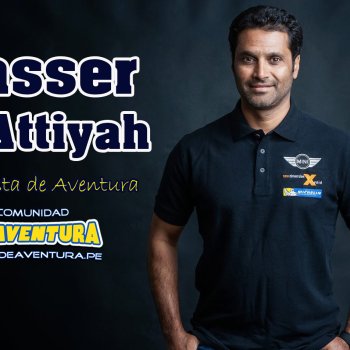
Nasser Al-Attiyah: The Prince of Off Road 4X4
If you like Off Road and 4X4, you have surely heard about Nasser Al-Attiyah, the Qatari prince, pilot, and champion of the Dakar rally. However, few know that he has also been an Olympic athlete on 4 occasions, that he enjoys Bob Marley's music, and that he even rented a Hummer from Robby Gordon to compete in the Dakar in 2012. Let's delve deeper into this Adventure Athlete. Photo: Red Bull His name is Nasser Al-Attiyah, but his friends call him Saleh. He is a Rally S-WRC and Dakar pilot. He was born in Doha on December 21, 1970, and enjoys classical music and Bob Marley's reggae. He is a member of the Qatari royalty and his favorite food is roasted camel, which he recommends trying. Photo: Red Bull Nasser is incomparable. He has short dark hair, brown skin, brown eyes, and gapped teeth. He is friendly and very skilled. Besides being a rally driver, he is an Olympic medalist for his country in shooting and the owner of a financial conglomerate with around 40 companies. Photo: Sport360 As a driver, he won the Production World Rally Championship in 2006; he triumphed in the Dakar in 2011, being the only Arab to win the competition, and repeated the victory in 2015, dominating the race from start to finish. Photo: biser3a In Shooting, he finished 4th in the Olympic Games of 2004 and won a bronze in London 2012. Besides being the Qatari rally champion from 1992 to 1995, the year he stopped competing. His current co-driver and friend is the Frenchman Mathieu Baumel, with whom he has been competing for several years. Photo: commons.wikimedia His main rival and teammate is the Spanish champion Carlos Sainz, with whom he has had fierce disputes, as evidenced in 2010 when Nasser finished 2nd after Sainz, by only 2:32 minutes. This was the closest victory in the history of the Rally Dakar. Photo: Motorenlinea In 2012, he rented a Hummer from Robby Gordon, but faced numerous issues with the car and ultimately had to abandon the Rally. Al-Attiyah is not only an athlete with 4 Olympic appearances and two Dakar championships under his belt, he is also a great businessman, managing a massive family business. Photo: Sertoes The Qatari prince himself states that he does not live off cars, as it is just his hobby, and that his main focus is actually on the Barwa company, a financial complex with only 5 years in existence and ownership of over 40 companies. Photo: Ooredoo Discover more athletes and legends of adventure sports in our community
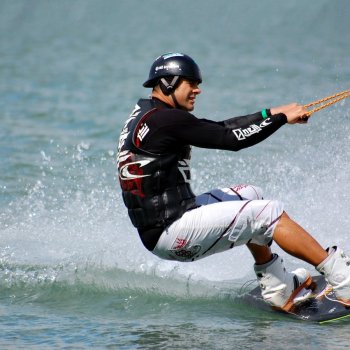
Wakeboarding: A fusion of surfing, skiing, snowboarding, and skateboarding.
Wakeboarding is a new sport that originated in the mid-80s in San Diego, California (United States). It is an adventure sport that incorporates the best features of water skiing, surfing, snowboarding, and skateboarding, but with more dynamism, freedom, and fluidity; offering the possibility of performing more daring maneuvers in a dynamic and fluid way. Photo: unleashedwakemag It was in 1985 when a surfer from San Diego, California, named Tony Finn, invented a board he called 'Skurfer'. The skurfer was a hybrid between water skiing and a surfboard, and Tony began using it being towed by a boat and performing all kinds of surf moves on it. Photo: worldpub The first modification made to the original skurfer model was the addition of foot straps, allowing for higher jumps. Photo: Xtreme Ride The secret of wakeboarding lies in harnessing the wake produced by the boat's engine to literally fly through the air. Fat Sacks or water bags are even used at the back of the boat to create larger waves. Photo: deviantart One of the characteristics of this sport is the absence of strict rules and the possibility to appeal to creativity. Wakeboarding's only modality is freestyle, which consists of performing the greatest variety of tricks. Wakeboard Boards Wakeboard boards are characterized primarily by being proportional to the weight of the athlete; the heavier the athlete, the longer the board. Currently, boards are manufactured in a wide variety of colors and shapes with striking graphic designs, but this is not the most important factor when acquiring your wakeboard. Photo: Amazon Wakeboarding Techniques for Beginners There are 3 basic steps: Getting in the water, positioning as the boat accelerates, and positioning once standing on the water. Photo: galerie.chip In the first step, we must position ourselves in a fetal position with half the board out of the water. It is important to remain tightly coiled. The arms holding the rope should be tight against the chest. At this point, we should ask the boat to start moving slowly so the rope becomes taut, and when it is, indicate to accelerate to maximum speed. Obviously, the force of the boat will require us to act quickly. The second step involves turning the board to reduce water resistance and keeping the arms close to the chest. We should act as if we were trying to stand up from a chair. Photo: Malagawake This leads us to a third and final step, which is simply about positioning. Once standing, we will shift our weight slightly to the back leg and adjust our hands depending on how the rope pulls us, as the sea surface is uneven due to waves, creating instability on the board. It is advisable to practice this sport on lakes. Photo: Red Bull Make the most of this summer and practice all the adventure sports you can
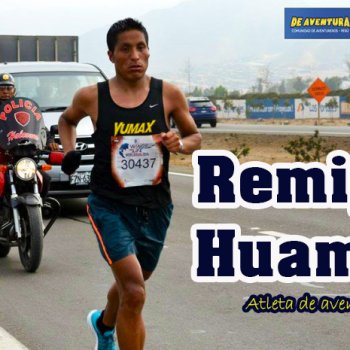
Remigio Huamán: The Peruvian runner who never gets tired.
Biography The story of Remigio Huamán takes us to Huancavelica, the place where he was born, raised, and currently lives. Since he was a child, Remigio used to walk 2 to 3 hours daily to go to school from his family's farm. This journey, which he made during his 10 years of education, gave Remigio the main tool for him to be recognized nationally and worldwide in trail running: His endurance. Photo: soymaratonista This Peruvian long-distance runner literally never gets tired. Every time he finishes a race, he appears completely calm, serene, controlled, and shows almost no signs of exhaustion. Huamán has been participating in national and international races and marathons for over 15 years and is considered one of the toughest and most resilient runners in Peru. Photo: regionhuancavelica.gob For now, the runner from Huancavelica is considered one of the best ultra-distance runners in South America. He has victories in The North Face Endurance Challenge, the Ultramaratón Yumax -80km-, or the 100km Desert Challenge Paracas. Just last year, he finished 2nd in the Wings for Life World Run, covering over 78km in 5:30 hours in a curious race. Photo: Red Bull Currently, Remigio trains with the renowned Spanish trail runner Octavio Perez, who assures that Remigio is a diamond in the rough and with his innate qualities and a well-structured program focused solely on priority objectives, Remigio will soon be the Ultra Trail World Champion. Photo: Yumax Huamán doesn't hide his desire to be the world champion and defeat the Catalan Kilian Jornet, the current world champion and considered the best mountain runner on the planet. In addition, it seems that Remigio wants to make the leap to trail running and dedicate himself to ultra-distance. His intentions are not few, and he is betting heavily on the future. Wings for Life World. The Wings for Life World Run is a charity race that not only raises funds for spinal cord injury research but also introduced a completely new format: Photo: runners.es All runners around the world started at the same time, competing against a moving finish line that automatically eliminated them from the race when passed. They, along with 35,394 participants, ran to escape the Catcher Car in the first edition of the Wings For Life World Run, the race without a finish line. Photo: Red Bull Remigio Huamán ran shoulder to shoulder, thousands of kilometers apart, against Lemawork Ketama, but in the end, only 9 meters separated them, giving them first and second place, with 78.57 km in Austria and 78.48 km reached in Peru. Photo: wingsforlifeworldrun They will take "The Winner's Lap" and travel to incredible places where they will fly in helicopters, swim with sharks, and enjoy running together in the most impressive places in the world. Photo: Red Bull Join these champions in the quest for a cure for spinal cord injuries and run on May 3rd in Lima! Without a doubt, Remigio is a great adventure athlete; and as the title suggests, he never gets tired...of winning.
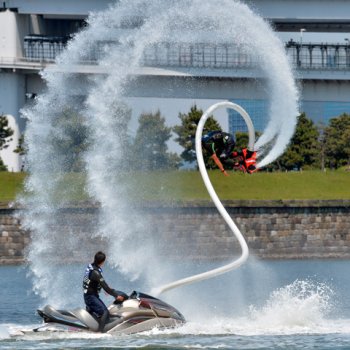
Flyboard: The new sport of the future.
In these modern times, where technology advances by leaps and bounds, adventure sports have not been immune to the implementation of this technology to create and practice new sports. In France, a new sport has been created, the Flyboard, a new water activity where you are propelled by jets of water over the sea, allowing you to "fly" and perform various acrobatics in the air and also underwater. Photo: infopediablog This sport has already arrived in Peru and this summer is capturing all the attention and sympathy of the people. The Flyboard was created in 2011 by the Frenchman Franky Zapata, who was a world jet ski champion. His passion for this sport led him to innovate in new alternatives to practice new water sports, thus creating this sport. Photo: cdn.revistagq What is this sport about? An essential requirement to practice this sport is to have a jet ski. The Flyboard equipment brings a hose that attaches to the jet ski's exhaust to take advantage of the propulsion and generate the thrust that lifts the athletes in the air. Photo: bahia-duque All the water pressure generated by the jet ski goes through the hose (which measures from 12 to 15 meters) and reaches a board called Flyboard. This board, attached to the boots of the person performing the maneuvers, has the main feature of emitting a large jet of water taking advantage of 90% of the jet ski's propulsion. Photo: paperblog The other 10% of the water force is expelled through two tubes that go in the hands and serve to provide direction and balance on the water. The Flyboard allows the person to perform different maneuvers and tricks. The board is controlled by moving the feet and maintaining balance with body weight, very similar to a skateboard. Photo: rpp Safety elements such as life jacket, helmet, wetsuit, and float are essential to be able to practice this sport. Without a doubt, this summer the Flyboard is going to be a hit on our beaches. Now you know, if you want to try something new and radical, get on a Flyboard. Fill your summer with adventure with all the information from our community
A lifetime of adventure
Frank Fernandez (Roller - 72 years old) Frank Fernandez is a roller skater who, at 72 years old, has been skating since the 1960s. Aware of the risks and injuries, he comments that he plans to skate until the last day of his life. A true example of overcoming challenges and love for the sport. The skatepark where he currently skates is located in front of the high school where he graduated in 1960. After graduation, he went to college, something unusual for someone like him who lived in a dangerous area. However, he discovered the importance of college; 34 years later, he would be working as an accountant for a company. One day his wife asked him: "What will happen if you keep doing this for the rest of your life?" At that moment, Frank decided to leave everything behind to dedicate himself to what he loves and enjoys: skating. "I believe that when I focus on doing something, I can do it. Many people tell me: you will get hurt and end up with a battered body, but I don't know, that's just how it is," he says. He knows he runs the risk of injuries, but that kind of determination characterizes him. At 62, the doctor diagnosed him with breast cancer and recommended he stop skating. The only thought that crossed Frank's mind was: "I will keep skating until I die." Eddie Hunter (Skiing - 88 years old) Many know him as "The Wise Man" for his emotional story and connection with Banff National Park and Mount Norquay (Canada), places that have been his home all his life. Eddie was born in 1926 and has been skiing at the Banff resort since then. He is a skier who expresses the sensations that the mountains have transmitted to his life, proudly sharing them with his children and grandchildren. He describes himself as a piano, with 88 keys, some white and some black, but together they create melodies. Hunter affirms: "The mountain imparts teachings, gives you the wisdom to move forward, and be a better person." Many people are unaware of the most beautiful sound of the mountain; few enjoy the silence at the summit, that place where it's just you and the mountain. "What I feel in the morning when I see the sun covering the mountains and making the snow shine, turning to see my children and grandchildren skiing, maturing, progressing, overcoming what I did; it makes me feel alive and happy." The mountain gifts us with its peace, wisdom, and beauty, creating a romance between people and it. At 88, Eddie states: "Many things in life can be black or white, but it's just a matter of finding the melody between them, like a piano." Gwyn Haslock (Surfing - 70 years old) Meet the story of Gwyn Haslock, who started surfing as a child and became the first female surfing champion in the UK. Now, at 70 years old, she still goes surfing two or three times a week in her homeland (Cornwall) and has no intention of stopping. Her father always encouraged her from school to be persistent and take things calmly, to go with the flow. 70 years later, Gwyn states that every time she enters the sea, it's not to compete but because she feels it. She and her brother learned to surf thanks to their father; the first boards they used were for gliding on the shores and learning to catch the waves, "you just got on and let the wave carry you." Back then, wet suits were not used, and longboards would arrive later thanks to the coastguards. Gwyn's first competition was in 1965, and she was the only woman in the competition, so she had to compete against men. Just two years later, she would become the first British surfing champion. "I love getting on the board, feeling the wind, and letting the wave carry me; there's nothing like it." In surfing, you have to be persistent with the waves; each one is different, just like things in life, you have to paddle to reach them. Gwyn now just wants to enjoy: "I know I don't have many years left, so I just try to go out and enjoy every moment I have." Adventure is the best way to learn, awaken your adventurous spirit and start living.
Adventure Highlights: 2014 Recap
The 2014 has been an excellent year for adventure sports in Peru; both collective and individual. At the national team level, our country has achieved sporting successes to highlight and be proud of. Undoubtedly, this is evidence that we are growing and that we have been blessed with a rich and unlimited geography for the practice of any outdoor sport. For our community, it is a joy to be part of the growth of these sports. We witness the increase in sporting events, the practice of new sports, the development of new circuits, the intensity of our athletes, and especially the unity experienced among all our members. Therefore, we wanted to summarize what the year 2014 was for our DE AVENTURA community. Trekking: Here we saw adventures in more than 10 different cities: From ascents to Cerro Mokará in Tacna to hikes to Santa Ana waterfalls in Piura. One of the main Trekking adventures this year lasted 15 days and covered from Lake Titicaca to Volcán Misti, a very tough challenge without a doubt. We cannot forget the adventures in Huaraz, Cusco, Lima, and Huancayo, where many athletes are put to the test. Cycling: Whether downhill, cross country, enduro or freestyle, this is one of the sports with the greatest development today. Many races, events, trainings, clubs, and above all countless cyclists make it one of the most practiced sports in Peru. This year, the big winner, both nationally and internationally, was Sebastián Alfaro, who competed in the MTB world championship finishing 4th in his category. It is worth mentioning the Reto Amazon Mountain Bike cycling rally in Tarapoto, a spectacular adventure in a city ideal for this sport. Canoeing: This year we not only enjoyed classic canoeing on rivers but also other rowing modalities such as Va’a (Polynesian Canoes) or SUP (Stand Up Paddle); both rowing modalities suitable for rafts and surfboards respectively. Lunahuana was one of the areas with the highest number of visits during the year for canoeing. Followed by the Chili, Mayo, and Perené Rivers, where kayaking and canoeing are widely practiced. Climbing: In 2014, we really climbed high. Our members climbed walls, rocks, and even snowy peaks like: Huandoy, Coropuna, Ausangate, and Alpamayo. More and more climbers in Peru are emerging, many start as amateurs and improve by climbing ideal spots like Hatun Machay, Vichuya, Antacocha, among others. And as everything that goes up must come down, there was also rappelling this year, this is one of the winning photos of the De Aventura rappelling contest in Huarochirí. Sandboarding: Toromata and Huacachina, two dunes that we will all remember for their incredible descents and magical sunsets. Many riders are forming clubs and groups, consolidating the growth of Sandboarding and the care of the areas where it is practiced. This was demonstrated in our GoPro contest, as the winning adventure was precisely about this sport. Other sports, such as paragliding, bungee jumping, surfing among others, have completed our adventure in 2014. These sports are definitely addictive and full of adrenaline. We assure you that one does not return the same after experiencing them. Talking about surfing this year means talking about titles and champions, about our national team and our champion Anelí Gomez, we can only thank them for bringing the name of our country high. And on our part, let's continue to promote these sports that bring us so much satisfaction. We hope that 2014 has been a good year for all our Adventurers; and we hope that this 2015 brings us many more adventures.

10 useful tips for all your trips
At this time of year, when many people are thinking about traveling and discovering new and diverse destinations, it is good to remember that a good trip encompasses many aspects to have a good time. That's why we present you with this guide with 10 super useful tips for any of your trips, read them, share them, and put them into practice on your next adventure trip. 1. Plan without excess. Planning is one of the best ways to save time and money on your trips. The more you know about your destination before stepping on it, the more you will enjoy the experience. Browse and search for all options for hotels, flights, tours, tourist attractions, etc. Decide in advance the places you want to visit and always have a plan B in case things don't go as planned. 2. Fly with layovers. If you have enough time to save a few dollars (or soles), a good option is to travel with layovers. Generally, these tickets tend to be more affordable; You can search online for direct and indirect routes to your destination. During the early hours of certain weekdays, some airlines usually offer deals and discounts on their tickets, take advantage of them. 3. Travel light. A good traveler knows to only bring the essentials. If you are going on a trip where you will have to move from one place to another, it is not advisable to carry a large backpack or suitcase. Also, remember that you may be charged for excess baggage or if you are traveling in a group or on a route, it will be impractical to carry all that. It is recommended to roll clothes instead of folding them, this will save you space. 4. The hotel that suits you. Accommodation is very important, it should be comfortable and safe. You don't always have to look for the cheapest option, it's all about making the most of every expense that comes your way. Prioritize the location of the hotel, that will make things much easier during the trip. Also, if you are going to spend a good amount of time at the hotel, try to find one that offers breakfast, wifi, and good services. 5. A friend is a haven. If you don't want to spend on lodging, another option is to contact a friend in the destination where you are going and have them provide accommodation for a few days. Ok, let's say you don't have friends all over the world, well, there are also websites like couchsurfing, where you can find people who offer accommodation in their homes for free. This option will help you meet new people, new cultures, and it will be a unique and different experience. 6. Eat like a local. If you are going to travel, don't go for fast food, which you can find anywhere in the world. Go for local cuisine and have a culinary experience as it should be. Forget about french fries and soda; dare to eat jungle ants or drink regional plant infusions. If you are not ready to try these snacks yet, you can also find local food very cheap in hidden local eateries or markets in the city. 7. Seek what you like. It's hard to resist taking a photo at the most famous places in cities. Visit well-known museums or the squares talked about in books. But in reality, traveling is a personal experience and it's about taste. If you love food, focus on finding unique and recommended restaurants. If you love art, dedicate more time to a museum you like or sign up for a temporary workshop. Don't be afraid to stray from the traditional tourist path and look for something special to you. 8. Update with apps. In the age of technology and gadgets, your mobile phone can help you save money. There are applications on the market for everything: travel guides, maps, conversation guides, tours, recommendations, and many more topics. 9. Scan your documents. You never know what might happen before or during the trip, but it is always advisable to anticipate events (especially negative ones); Therefore, it is highly recommended to scan all your personal documents and store them in a safe online place. Losing your physical documents can bring many procedures and problems, plus it will be a relief to know that you have a plan in that situation. 10. Be responsible and generous. There are many travelers who enjoy visiting tourist and emblematic places, taking many photos, or recording their adventures. All good with that, but some believe that taking an extra "souvenir" from the place is a great feat. Don't deceive yourself, taking a little stone or a piece of any of these places only destroys them little by little. Try to be a responsible traveler, take care of these places, respect their culture, remember you won't be the only one there, and if you traveled so far to see them, it wouldn't be right to destroy them.
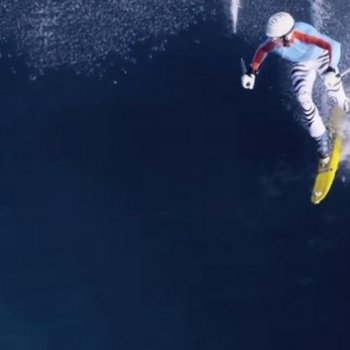
Extreme Versatility: Surf in the snow and ski on the waves
Bogner Films is one of the film production companies that has surprised us this year with two extremely fun and out-of-the-ordinary recordings. Do you surf on snow and ski on waves? Leading all this is Willy Bogner, a filmmaker since 1960 and a ski lover since always. Currently, he has a clothing company for skiers with the same surname. However, he continues to do what he loves, skiing and making films. Ski on Waves The first recording that aired was called "Surfing Hawaii", where Bogner and company surfed the waves in a rather strange way, nothing more than on snow skis. They had a great surfing session, with long and perfect rights and lefts, under an amazing sun and very good energy. Riding the waves of Hawaii on a ski team (Ski on Waves) Surf on Snow The second video was not released long ago. It's called "Snow Surfing" and as the name suggests, it's nothing more than surfing on snow. We say nothing more, because watching them do it makes it look so easy that we wonder, why didn't we surf on snow before? Athletes who surf through the mountains (Surf on Snow) Video: Youtube (Bogner) Have fun with this pair of crazy adventurers. Surf on snow, Ski on waves and share them with the adventurer community.

Víctor Fernández: The King of Windsurfing
Windsurfing combines your skills both in the water and in the air. One moment you are surfing a big wave, and the next, you are flying 15 meters above it. Someone who knows this very well is Víctor Fernández López, the Spanish rider who was the 2010 Windsurfing World Champion in the wave category. Here we tell you how this young man became a Adventure Legend. Photo: victorfernandezwindsurf Víctor was born in Almería (Spain) on April 25, 1984. He grew up in Almerimar, where he started practicing windsurfing at his father's school when he was just a 5-year-old boy. At the age of 14, his father allowed him to spend the summer in Pozo Izquierdo (Gran Canaria) as a reward for getting good grades. There he began his professional career in the world of windsurfing. Photo: victorfernandezwindsurf In 1999, he became the IFCA Junior European and World Champion and the IFCA Senior European and World Runner-up. In the PWA Wave World Championship, he achieved consecutive runner-up positions in 2007 and 2008. In 2009, he won the Spanish Championship, a success he repeated a year later in 2010. Photo: victorfernandezwindsurf Precisely in 2010, Víctor achieved the most important milestone of his career to date: the Wave World Championship of the PWA. Photo: locodeldeporte Víctor Fernández had been the best in waves throughout 2010, winning in Pozo (Gran Canaria) and finishing second in Klitmoller (Denmark). Due to lack of conditions, the Spanish windsurfer could not compete in the Sylt (Germany) event or the last event in Cabo Verde, making him first in the rankings and Windsurf World Champion. Photo: victorfernandezwindsurf To this day, he is the only Spaniard to have achieved that award. His success earned him a nomination at the 2011 Laureus Awards in the category of best extreme sports athlete. Photo: victorfernandezwindsurf In 2011, he could not defend his title, but he achieved a commendable fourth place and retained his Spanish Champion title. Photo: victorfernandezwindsurf In 2009, he participated in the film Four Dimensions, directed by Andre Paskowski. In 2011, he took part in Minds Wide Open, by the same director. In both films, he showcases his skills as an extreme windsurfer. Photo: victorfernandezwindsurf Join our adventure sports community and discover more legends of the world of sports.
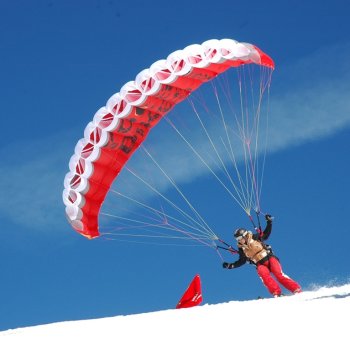
Speedriding: Combination of Paragliding and Skiing
The Speed Ride is a skiing modality developed in the French Alps. This sport combines skiing and paragliding, it is so spectacular and full of adrenaline, allowing you to glide on the snow and fly thanks to a sail similar to that of a paraglider. If you are a fan of extreme sports and enjoy experiencing adrenaline rushes, you must try this sport. Photo: farm8.staticflickr. Primarily, it allows you to descend faster, ski inaccessible areas, and take off from the ground to fly over any obstacle. It combines the sensations of paragliding with the adventure of flying over the slopes while skiing. Photo: www.Lugaresdenieve This sport was born in the late 1970s when French mountaineers began jumping with parachutes and skis from steep mountains. These parachutes were modified over the years to become larger and easier to launch. Photo: www.witajwpodrozy In 1996, slalom competitions with these sails began in the United States. Today, there are more than 30 manufacturers of this type of sails worldwide. France was the first country where the first Speedride competition was held: the "Speed Flying Pro Les Arcs" in January 2007, organized by Antoine Montant. Photo: adventurelifeuniverse Today, this sport is practiced all over the world, and there are already pilots who have managed to descend large mountains at high speeds such as Aconcagua (Andes) or several peaks in the Alps. Photo: www.lugaresdenieve The main recommendation to start in this adventure sport is to have a high skiing level that allows you to descend slopes with all types of snow. This is a very specific activity that can only be practiced off-piste or in designated areas, mainly in the winter season.

Navigating with a Compass
Surely many of us have seen several explorers using their maps, cartographic charts, compasses, or simply the sun or the stars to orient themselves in the middle of nature and avoid getting lost. Well, today we will show you how to orient yourself in the middle of nowhere using a compass. If you often go on adventures in the forest, countryside, mountains, or other environments, this post is for you. Photo: Profisica.cl First of all, we must know the instrument we are going to use, the compass. To begin with, not all compasses are the same in shape and size, but they do have a magnetized needle that points towards the earth's magnetic field. The main elements of a compass are: The direction arrow is the arrow on the base plate that points outward from the compass. The bezel is the dial surrounding the cover and shows the 360 degrees of a circle. The magnetic needle is the needle that rotates inside the cover. The North arrow is the non-magnetized arrow inside the cover. The North-South lines are the lines arranged parallel to the North arrow. Photo: Wikihow Second important item, how to hold the compass correctly. Place the compass completely flat on the palm of your hand and bring it close to your chest. If you are traveling, that is the correct way to hold the compass. If you are going to check your location on a map, place the map on a flat surface and place the compass on it to get a more accurate location. Photo: Wikihow Third point, difference between True North and Magnetic North. The main difference is that true north indicates the point where all the earth's longitudinal lines meet, that is, the North Pole. Magnetic north refers to the inclination of the magnetic field, the difference between both 'norths' is approximately 1 degree (In Peru). Unfortunately, due to magnetism, the compass points to magnetic north and not true north. Photo: Wikihow Always remember to use reference points to accurately follow the trajectory of the direction arrow, look at the arrow, then focus on a distant object like a tree, a mountain, an antenna, and use them as a guide. How to know where you are? Choose 3 distinctive marks that you can see, preferably locate them with the greatest possible distance around your field of vision. Point the direction arrow towards the first mark. The magnetic needle should turn to one side. Now turn the bezel until the North-South lines align with the north end of the magnetic needle. Once aligned, they will tell you where the direction arrow is pointing. Photo: Wikihow Locate the direction of the mark on the map. Place the map on a flat surface and then place the compass on the map so that the North arrow points to the true North of the map. Now, position the compass so that its edge passes through the mark on the map, making sure the North arrow continues to point in the same direction (to the North). Photo: imagizer-cv.imageshack. Triangulate your position. Draw a line along the edge of the compass that passes through your approximate position. This is the first of three lines you must make to find your exact position by forming a triangle with all the lines. Repeat this process with the other two marks. When you finish, you will have 3 lines forming a triangle on the map. Your position is within that triangle. Now go on an adventure with complete safety and put these adventure tips into practice. See also: 10 applications every traveler needs. How to prepare for your next adventure 10 useful tips for all your trips 8 tips for Adventure photographers
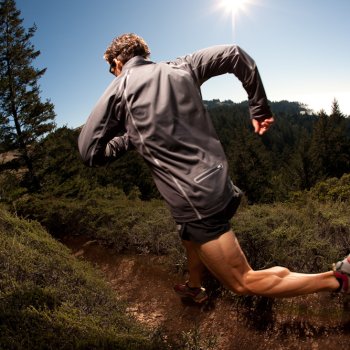
Trail Running: Running through nature.
Trail running or mountain running is a sport that basically consists of running "off-road," that is, a route through mountain trails, footprints, tracks, or secondary roads, through mountains, hills, and mounts, crossing streams and rivers, with steep climbs and abrupt descents. The main difference with marathons, trekking, and hiking is that generally, trail running takes place in more rugged places, often in mountainous terrain with steep slopes where ascents and descents are continuous; therefore, both the nature of the terrain and the elevation gain of the route are important in the course. Photo: ho limites In comparison with cross-country races, the difference is that in the latter, shorter distances are run, while in trail running, there is no defined distance limit. This demands greater endurance from runners to face long distances and routes. Photo: adventureblog.nationalgeographic What equipment is used for trail running? Many runners use specially designed shoes for this sport with better soles than regular sneakers. Special footwear with nylon-like material is often used to protect the feet from puncture wounds from sharp rocks or other objects. Photo: trailrunningaustralia There are many trail running races organized worldwide. Distances vary from 5 km to over 161 km. Every 5 or 10 km along the route, there are points that provide food and drinks during the competition. Photo: news.gorefabrics Most trail races consist of a single stage where competitors' times are calculated by subtracting the time spent at aid stations from the total time achieved by the athlete. Some competitions last for days and are done in stages. Trail running not only involves enjoying breathtaking views but also allows for a different training experience than running on asphalt. The difference in terrain implies a change in style, especially due to the uneven surfaces of most routes. Photo: limaoutdoors You must carefully balance your speed and safety. Generally, when running on the road, you don't need to pay much attention to the terrain conditions. This allows you to focus on your speed and performance. Trail races are exactly the opposite. The terrain is the most relevant aspect, and you must pay full attention to it. Photo: gopro In short, in trail running, average kilometer times are irrelevant. What truly matters is the experience of running in natural environments. See also: Remigio Huamán: The Peruvian runner who never gets tired. Gladys Tejeda: Peruvian Cross Country This February 1st, the Ultramarathon Challenge 2014 will be held at Playa Asia

How to patch your tires on the go
One of the most common issues in cycling is getting a flat tire while on the road. Here in Peru, this happens frequently due to the routes, paths, and slopes that many cyclists traverse. In this post, we will show you how to solve this problem in an appropriate and simple way. So pay attention and follow these steps for any emergency on the road. Photo: Bicimecanica First, let's see what tools we need to assemble our Flat Tire Repair Kit: Patches, tire levers, portable inflator, glue, and sandpaper. Photo: fransaiz 1- Remove the inner tube. Using the tire levers, we need to take out the flat inner tube from the tire. What you need to do is insert one end of the tire lever between the rim and the edge of the tire, and lever it to dismount the tire. Sometimes it is necessary to loosen the brakes a bit to remove the tire more easily. Photo: enbicipormadrid 2 - Locate the puncture. Inflate the inner tube enough so that the air pressure can escape from the tube and allow us to quickly locate the puncture. To find the puncture, you must be patient and go through your tube inch by inch. You can locate it more easily by submerging the tube in water or simply passing the tube close to your ear until you hear and feel the air escaping. Photo: pad3.whstatic 3- Check your tire. Once we have located the puncture, we proceed to check the tire to find the object that caused the hole. If we find it, we remove it and continue checking the rest of the tire to prevent any other punctures. Most punctures occur on the outer part of the tire, but sometimes, the spokes of our tires can also cause punctures, so it is advisable to use protection between the rim and the tube. Photo: 4.bp.blogspot 4- Apply the patch. This is the part where you must pay attention to all the details. To stick the patch, you must first gently sand the area around the hole so that the patch adheres better. Second, you must keep the tube taut so that the patch sticks correctly. Then, add a good amount of glue to the puncture area and let it dry for 30 seconds to 1 and a half minutes. Now, place the patch and press firmly on the tube for approximately 10 minutes. Photo: cyclecity 5- Remount your tire. To do this, slightly inflate your tube. First, we mount the tire on the rim. Then we insert the tube between the tire and the rim, starting by locating the correct position of the valve (or Presta valve). Finally, we just need to adjust all tire components properly. Inflate the tire and roll it to naturally fit the rim. Now, just put your tire back on your bike and inflate it to continue your journey. Photo: surconewyork Remember to always carry the appropriate protection and your anti-flat kit so that nothing stops your adventures. See also: John Tomac: The Essence of Mountain Bike. How to Choose Your Bike According to Your Size. Sebastián Alfaro: A Rocket on Wheels World Cycling Elite Present at the VIII Edition of the Tour de San Luis Pedaling for Children
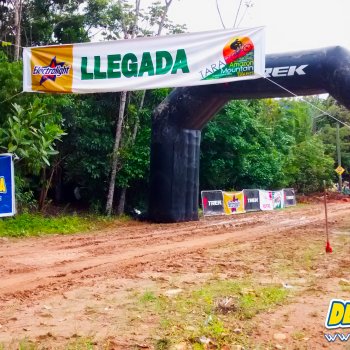
"First Cycling Rally: Amazon Mountain Bikers Challenge"
On Saturday, November 29th, the first mountain biking rally "Amazon Mountain Bikers Challenge" took place in the town of San Roque de Cumbaza, located an hour away from the city of Tarapoto. Part of the De Aventura team was present to participate in the event and share their experience of this new jungle adventure. It all started on Saturday at 7:30 in the morning, participants gathered at the meeting point in the city of Tarapoto to be taken to the event location. During the journey, we were able to enjoy the beautiful landscapes of our jungle, full of peace, nature, life, and a hint of mystery. Upon arrival in San Roque, we found a perfect setting for mountain biking; the weather was mild, not too sunny, with a light drizzle. The 21 km competition route was filled with inclines, descents, flat stretches, narrow paths, trails, and an incredible amount of vegetation surrounding us. This route was specially created for this mountain biking rally and it was truly amazing. Many cyclists from different parts of Peru were amazed by this beautiful yet challenging course. Participants unloaded their bikes and began fine-tuning the last details before the start. In the moments leading up to the rally, there was an excellent atmosphere, full of camaraderie, excitement, adventure, and great vibes. Then came the starting time, around 11 am, and the cyclists set off in groups, according to categories: 1.- Open 18 to 29 years. 2.- Open master 30 years and older. 3.- Open women 18 years and older. 4.- Open novices 18 years and older. 5.- Novice Junior 15 to 17 years. There were over 50 competitors at the starting line ready to pedal away. The beginning of the rally set the pace for many cyclists, with the most experienced and prepared taking a slight lead in the first kilometers. During the journey, some cyclists faced technical issues and fell behind, but thanks to the locals who provided assistance to many cyclists, they were able to continue and complete the race. After completing the 21 km route, an exhibition of BMX jumps and maneuvers began, while the rally competitors rested, regained strength, and prepared for the awards ceremony. The best time in the competition was 69 minutes achieved by Elmer Gonzales Ocas, followed by Luis Fuster in second place with 72 minutes, and Lenin Mesias Jimenez in third place with 76 minutes. For us, it was an unforgettable experience, not only because of the organization, the route, the atmosphere, the participants, and the care for nature, but above all, for the unity that a demanding sport like cycling created. The next day, the 4th edition of the "Amazon Race Forest" took place, featuring a circuit of three categories: 10, 21, and 42 km, filled with jungle, mountain, and scorching heat, making this mountain race (Trail Running) an exceptional challenge for all runners. Finally, we want to thank Amazon Mountain Bikers and Bruno Mendoza for the excellent organization and all the facilities provided during our stay in Tarapoto. Undoubtedly, when things are done right, great results are achieved. We hope that adventure sports continue to be promoted throughout the country and that we become more adventurers forming this great community. See also: John Tomac: The Essence of Mountain Bike. How to Choose Your Bike According to Your Size Pedaling for Children Peruvian Cyclist with Disability Wins Silver Medal in Spain World Cycling Elite Present at the VIII Edition of the Tour de San Luis
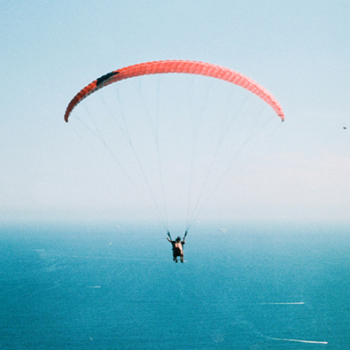
Paragliding: Elements and Flight Phases.
Paragliding is a flexible ultralight glider that does not need an engine to move, it harnesses the energy of gravity and air resistance to fly. It weighs less than the pilot who flies it and is flexible because it lacks rigid structures. Take off from the ground and join us on this new paragliding flight adventure, where you will feel like leaving your fears and problems behind. Photo: diariodelvalledelaorotava.blogspot Paragliding Elements: The Wing: is what truly allows us to fly, it is a flexible structure made of several layers of fabric and a set of lines that give the fabric a wing shape. The wing has several parts that it's good to be familiar with: intrados, extrados, leading edge, trailing edge, stabilizers, ribs, cells or boxes, mouths or entry of the boxes. Lines: are a set of highly resistant straps that are connected on one side to the harness where the pilot sits, and on the other side they are attached to the suspension lines. Brakes: are the aerodynamic controls of the sail. They consist of a pair of lines that, when activated, can brake a part or both sides of the wing, and by shifting the body's center of gravity, we can steer the paraglider. Harness: is the element that keeps the pilot connected to the wing, preventing them from falling. It currently includes a series of passive safety elements such as foam plates, airbags, etc. Helmet and Boots: They are also part of the paragliding equipment, the helmet protects the aircraft's control center, and the boots serve as the landing gear. Radio, Barometer, Compass, GPS: are quite sophisticated flight instruments that allow us to significantly improve the duration and distance of our flights. Photo: zero-gravity Flight Phases: Equipment Preparation: One of the greatest advantages of paragliding is that the equipment preparation is very simple, just take the paraglider out of the bag, unfold it, check that the lines are not tangled, connect the lines to the harness, connect the accelerator, put on the helmet, boots, gloves, and flight suit, turn on the barometer and GPS, perform the pre-flight check, and you're ready to go. Takeoff: Once the equipment is prepared, and the atmospheric conditions are suitable, we position ourselves on the slope facing the wind, holding the brake and the corresponding A line with each hand. We give a firm pull, and when the wing is above our head, we can start running. Now we are flying, we can sit back and get comfortable. Flight: the flight phase is the simplest. Initially, we will focus on directing ourselves to the landing using the brakes to turn. As we gain more flight experience, we can start focusing on staying in the air longer by taking advantage of ridge winds and thermals. Landing: Once we are over the field, we exit the harness and let the wing gain speed by releasing the brakes. As we are about to touch down, we brake the wing, converting speed into altitude. With this slight climb, we lose all the speed we had and land gently. Packing Up: this is the most tedious phase of the flight, but it must be done so that everything is in place for the next flight without having to untangle lines and straps. Photo: nova-wings Now, set aside your fears and start flying with complete safety. It will be an unforgettable adventure. See also: Feel Safe with Tandem Paragliding Flights Nothing Better than Paragliding over the Lima Coasts Speedriding: Combination of Paragliding and Skiing Flying on Paragliding over Patagonia
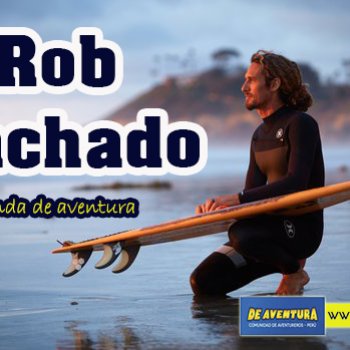
Rob Machado: Surfing with Style and Aloha.
Rob Machado is one of the most recognized figures in surfing, a living icon, who continues to expand the definition of what professional surfing is truly about. Machado has consistently been at the top of the rankings as a competitor on the ASP World Tour. With 12 career victories, Machado placed among the top ten surfers for eleven consecutive years and was inducted into the Surfers' Hall of Fame in 2000 and re-added in 2006. Photo: .subinet.es Rob left us with unforgettable heats, like the one at Pipeline in 1995 against Kelly Slater, where two great friends battled to become world champions. Photo: baluverxa.com Since leaving the ASP tour in 2001, Machado has been one of the most important ambassadors of surfing, traveling the world, surfing the best waves, and expanding the definition of "high-performance surfing" on finless wooden boards known as alaias. Photo: Robmachado.com Rob's style off the surf is another admirable quality, as seen in his commitment to supporting various charitable causes. Rob has established the Rob Machado Foundation, which through its annual golf tournament supports several charitable organizations dedicated to environmental programs in Southern California. Photo: markyourwaves.es He has also created the Rob Machado Surf Experience, a highly anticipated surfing competition for 16-year-old girls and boys in Rob's hometown of Cardiff, California. Photo: wikipedia.org All of this, combined with his grounded nature and approachable aura, makes Machado one of the most influential athletes of all time. And as he continues to write his incredible story, he is an influence that will only continue to grow over time. See also: 5 tips for Surfing Gabriel Villarán: Peruvian Soul Surfer Kite Surfing: A dream turned sport Analí Gomez: Revolution on the waves Surf Championship in Cabo Blanco to award $10,000 to the winner National surf tournament: Pico Alto to take place from April 1st to June 30th
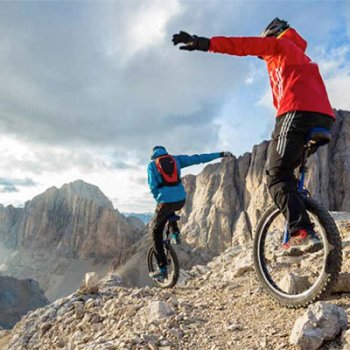
Mountain Unicycling
Everyone is familiar with mountain biking, an extremely demanding and risky sport. But as if it weren't fun enough, a new modality has emerged: Mountain Unicycling, an adventure sport that involves traversing rugged terrain on a unicycle. This sport, also known as 'muni', is carried out on terrain similar to that of a mountain bike. However, muni requires much more attention and balance from the athletes. Photo: KrisHolm Muni unicycles typically have a special design: They are equipped with strong axles, large tires, high-grip pedals, and sturdy frames. Some are also equipped with a tire or disc brakes, with the lever mounted under the saddle nose. The brake primarily helps to compensate for the downhill force, while more experienced riders also use it to slow down or stop. For those looking to get started in this sport, they will need to practice a lot and master both balance and physical performance, as like mountain biking, this sport requires a lot of strength and endurance. Photo: Nozzhawk.com The unicycle also requires a special design to make the most of the terrain where it is practiced. Therefore, a mountain unicycle should have strong tires, sturdy frames, high-grip pedals, ergonomic seat, among other features. Some models come with disc brakes or rim brakes for maximum safety. These systems are controlled through a lever mounted just below the saddle head where the rider will sit. Photo: Learnthis.ca There are already some brands dedicated to designing these mountain unicycles such as: Kris Holm, Nimbus, and Torker. When you go to buy a mountain unicycle for the first time, one of the most important qualities to consider is the size. The right size will depend on your height, leg length, weight, etc. Regarding the price of unicycles, they range from $300 to $900, depending on the size, brand, tire quality, and other considerations. Photo: Thatsxtreme Thinking of giving Muni a try? Remember that the first step is to practice on flat terrain before venturing onto any hills or mountains. At first, it will take a lot of practice and effort, but once you master it, nothing can stop you. See also: How to patch your tires on the go Sebastián Alfaro: A rocket on wheels John Tomac: The essence of Mountain Bike “First cycling rally: Amazon Mountain Bikers Challenge”

How to Camp in the Rain
You are thinking about going camping, but the place you are going to has a rainy climate. Don't let that stop you, you must be prepared to set up your tent and protect yourself from the cold. Follow these tips to be ready for this situation. Remember that the weather is part of the adventure and we must adapt to it. Photo: travel.sndimg. The first thing you should do is prepare a good luggage. Take with you suitable rain gear, whether you are going to the beach or to the mountain, remember to pack warm clothing and waterproof gear. When camping, avoid doing it under trees, if a storm catches you, branches, animals, or logs can fall on your tent. If it starts raining, do not lean on the tent walls, nor place any object that could create pressure. With a tarp, you can create a space outside the tent. This way, in case of rain, you can cook or be more comfortable in this area, without having to be inside the camping tent all the time. Photo: travel.sndimg. When setting up the tarp, remember to tighten it, as otherwise water could accumulate on the roof and eventually give in. Keep in mind that water can weigh too much and if the tarp breaks, it could flood everything. Be very careful. We recommend that you dig a small channel around your camping tent. This is a good technique to prevent rain. It should be about 20 cm wide by 20 cm deep, and it should surround your tent. This way, you will make rainwater accumulate in the channel and prevent your tent from getting soaked. A cup of hot broth, coffee, or hot chocolate can be comforting foods in the cold. Therefore, it is advisable to keep hot water using a pot. Photo: static.flickr. If you feel too hot due to physical activity or effort, gradually remove layers of clothing. This will prevent you from catching a cold. Do not go to sleep wet. With the cold, humidity can increase, and the sensation of low temperatures as well, so you could get even colder. Try to keep your hands and feet warm. These parts of the body are very sensitive to the cold, so it is advisable to dress them warmly. If you are short in stature, you can help warm up the sleeping bag by adding clothes inside. You can put in the clothes you plan to wear the next day, not only helping to keep warm during the night but also keeping the clothes warm for the next day. Photo: nemoequipment. Try not to sleep directly on the ground. It is recommended to place the thermal sleeping bag on a mat or mattress. If you are very sensitive to cold, you can heat a couple of small water bottles. Place them inside the sleeping bag a few hours before sleeping. This will act as a heater for 6 to 8 hours. See also: How to set up a tent in 5 steps ¿What should I carry in my adventurer's backpack? 10 useful tips for all your trips How to navigate with a compass
Lynn Hill: A Vertical Life
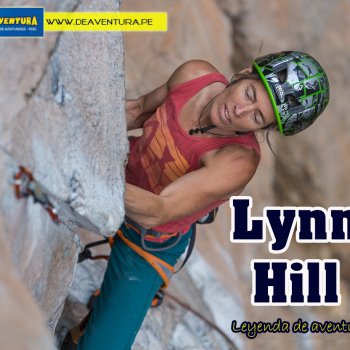
Lynn Hill, born in the United States in 1961, is arguably the most influential woman in rock climbing to this day. Nowadays, more and more women are climbing, but back in the 80s, it was truly something uncommon. She is renowned for her free ascent of The Nose in Yosemite Valley. Photo: 3.bp.blogspot Hill was born in Detroit, Michigan, but soon moved to California. At the age of 14, she started climbing, encouraged by her sisters. In less than five years, she would become part of the climbing community at the famous Camp 4 in Yosemite. Her relationship with climber John Long helped her learn and gain experience. Photo: cloudfront In 1979, she became the first woman to redpoint an 8th-grade route (7c+/8a), which was a groundbreaking achievement at the time. From 1986 to 1992, Lynn was by far the strongest climber, winning over 30 international titles, including five victories at the Arco Rock Master. Photo: bp.blogspot The only one capable of challenging her and offering resistance was the French climber Catherine Destivelle, with whom she shared a healthy rivalry. After ending her career as a professional climber, Lynn focused on rock and big wall climbing. She made a grand entrance into big wall climbing by achieving the first female ascent of The Shield. Photo: 2.bp.blogspot Lynn's greatest achievement, the one for which she is known worldwide and will go down in history, was the first free climb of The Nose on El Capitan (USA) in 1994. She wasn't the first woman in free climbing, but the first in absolute free climbing. No one had ever been able to climb the famous route using only hands and feet. Hill set a new standard for The Nose. Photo: sensepell.files In 1991, she achieved the first female 8b+ in the world with Masse Critique in Cimai, France. In 1998, she made the first female ascent of the iconic boulder ‘Midnight Lightning’ in Yosemite. In 1999, along with Beth Rodden, Nancy Feagin, and Kath Pyke, she freed Bravo ‘Les Filles’ in Madagascar. In 2005, she made the first free ascent of ‘West Face’ on the Leaning Tower in Yosemite with Katie Brown. Photo: mountainproject She has written a book, published in Spain by Desnivel, titled Free Climber, My Life in the Vertical World, where she recounts her experiences and impressions firsthand. See also: Dean Potter: Fly or Die The 11 Best Adventure Mountains in Peru Several tourists attended the RockFest 2014 Festival in Valle Dorado Huayhuay, La Oroya Climbing in Antacocha

How to Combat Altitude Sickness
The high altitudes are stressful for the body and the reduction of oxygen levels can produce debilitating effects and ruin your vacation. This is caused by the decreasing atmospheric pressure, which makes breathing difficult and often leads to a series of disorders known as Soroche, Altitude sickness, or Altitude sickness. Photo: vivelasalud What are the symptoms? Loss of appetite Nausea or vomiting Fatigue or weakness Dizziness or vertigo Insomnia Tingling sensation Shortness of breath after exertion Persistent accelerated pulse Drowsiness Peripheral edema (swelling of hands, feet, and face) Tips Drink plenty of water, dehydration can occur due to the high rate of water vapor lost from the lungs at high altitudes. Avoid caffeine and alcohol, as they can increase the likelihood of dehydration. Do not exert yourself excessively. Breathing is more difficult at high altitudes, and even if you are fit, you will still feel the effects if you push yourself too hard too quickly. Take breaks when you feel a lot of strain. When in a car, never look down the valley. If you are in a car, you are probably not used to such a dizzying view. This means that the more you look down the valley, the more likely you are to vomit. "Coca tea" is a drink commonly offered to tourists who exceed altitudes of 3,000 meters, this drink having a mere pharmacological justification: it is analgesic, bradycardic, causes euphoria, and moderates breathing, improving the subjective sensation of fatigue. Others prefer to directly put coca leaves in their mouths. The method is simple: the leaf is left to one side, and what is swallowed is the bitter juice it secretes. Of course, for those who are not accustomed, this is not entirely pleasant. There are also coca candies for those who want a sweet touch. Eating starchy and carbohydrate-rich foods can help with vomiting. If you have a headache, drink a liter of water and take acetaminophen or dexamethasone. Physically train before the trip. Although this does not guarantee an easier stay at high altitudes, it can improve your lung capacity to face the challenges of high altitudes. Photo: adventurelifeuniverse Always take precautions before heading out on an adventure, remember that your safety comes first to have a great experience and share it with the De Aventura community. See also: Tips for traveling alone 10 apps every traveler needs How to set up a tent in 5 steps 5 easy ways to start a campfire
Steve Fisher: The Master of Impossible Rivers.
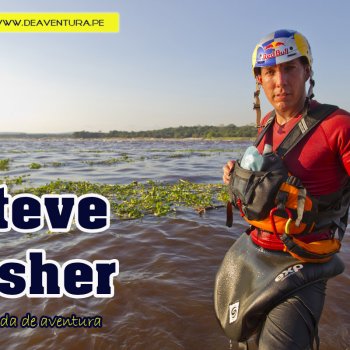
"I learned to paddle at the age of 6, not knowing that this would become my reason for living." This adventurer who carries Kayaking as a way of life is named Steve Fisher, and he is an expert in expedition kayaking in whitewater. His friends simply call him Fisher; he was born in South Africa on March 18, 1976, and is completely addicted to adventure sports, especially water sports. Photo: Redbull Steve is not afraid of the unknown; he has explored over 50 countries aboard his kayak. He and his canoe are made for each other. From his beginnings on the Bushman River at just 6 years old, he has navigated the rapids of all 5 continents, conquering over 100 first descents. He has been named the most complete canoeist in the world three times. Photo: Redbull For several years now, he has left competition behind, venturing into the world of exploring the most impressive rapids in the world. Among his first descents are rivers like the Irrawaddy in Myanmar, the Salween in China, the Yarlung Tsang Po in Tibet, and his recent conquest of the infamous Inga rapids. Photo: Redbull "The Great Inga Project" is a journey that follows the Congo River from its source to its mouth, covering 4,000 kilometers until reaching the Atlantic Ocean. This documentary was released in 2012 and has been recognized in various festivals. Photo: Paddlemag Steve lives for kayaking, and he says it from within: "The media and sponsors are afraid that I will die. I risk my life quite often, but for them, it's different if it's from a gunshot. For me, the result is more or less the same." His safety, determination, and speed help him overcome almost impossible situations. There is no doubt that Steve Fisher is an Adventure Legend. Photo: Kayaksession "The Great Inga Project" A documentary that narrates Steve Fisher's journey with his expedition team. They navigated through the endless political obstacles of Zimbabwe, full of difficulties and whims; they also had to face their own fears in an attempt to be the first to survive the brutal Inga rapids of the Congo. "It's the closest I've ever come to death," Fisher said after the expedition. The film premiered on August 24, 2012. See also: Pure Paddling: What is Va'a and how is it practiced? Know where to practice canoeing in Peru //
Cycling for the Kids
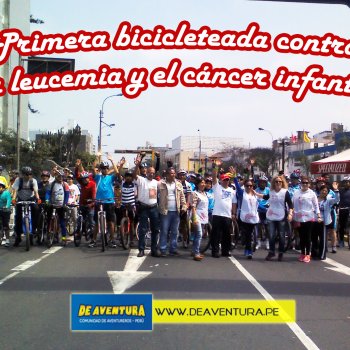
Last Sunday, October 26, the first bike ride against leukemia and childhood cancer was held in Lima. This event was organized by the NGO 'Ángeles de los arenales' and took place from 8 am in the district of Miraflores, right at the intersection of José Pardo with Arequipa. The De Aventura community was present, supporting and collaborating, so we bring you a brief summary of what this beautiful experience in aid of children was like. Participants arrived very early, all ready and full of energy to pedal together for a noble cause. The route for the athletes was from the meeting point, Ovalo de Miraflores, to block 1 of Arequipa Avenue. It was a round trip that brought together many cyclists aware of the magnitude of this terrible disease. At the end of the route, many prizes were distributed among the attendees, competitors, and family members; It was a Sunday morning to help and do sports, all in one place. We want to give a special mention to the sponsors and organizers, who ensured that the bike ride had all the necessary safety measures, organization, and appropriate awards. Among them are Specialized, Fitbike, Bicicentro, KHS, Hollywood backs, Motion, La lucha, Ciclovia, the Miraflores municipality, Equipak, Night Vision, Lyonus, and of course our De Aventura community. On the other hand, our congratulations and support to Ángeles de los arenales, who fight to help the most needy, especially children with cancer and leukemia. Their main goal is the creation of the First Inclusive Oncological Hematological Hospital in Peru. Thanks to them and the cyclists who collaborated in the fight for change in children's health. See also: “First cycling rally: Amazon Mountain Bikers Challenge” Mountain Bike How many disciplines are there? How to patch your tires on the road
5 action cameras for adventurers
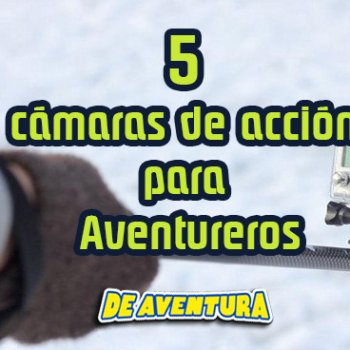
Action cams are the latest bet from manufacturers and extreme sports enthusiasts to document their travels. These cameras are specially designed to record in situations of movement, action, or adventure; and are compatible with various accessories that facilitate their adaptation to the body or sports equipment. Cycling, Surfing, Climbing, Diving, Paragliding, Off-Road; nothing is too challenging for these cameras, which have no problem showcasing all their virtues in places where recording conditions are not the best. Here we have a list of 5 perfect cameras for adventurers or extreme sports enthusiasts. Gopro Hero 4 Black edition ($499) Photo: cf-resrc.outsideonline GoPro Hero4 Black is, without a doubt, the best-developed action camera for athletes and audiovisual enthusiasts. It has the ability to record in 4k at 30 frames per second and take photos at 12 megapixels. Its processor is twice as fast as the previous version and has many improvements in terms of recording audio, night mode, and sharpness; Additionally, it has wifi and Bluetooth, allowing remote control from a smartphone or tablet and compensating for the lack of a screen. The Hero4 Black Edition is the most complete and powerful of them. 25% lighter, weighing only 73 grams without the waterproof case, and 30% smaller than its predecessors, the Hero4 Black Edition is the one to beat. It has a rechargeable 1,050 mAh battery, microphone input, and HDMI. The package also includes a waterproof case and some adhesive mounts to place the camera. Sony HDR AS100V ($300) Photo: sicklines The excellence that Sony is known for is well reflected in the Action Cam HDR-AS100V. This camera incorporates an electronic image stabilizer called Steadyshot specially designed for sports cameras from this brand. It features a Carl Zeiss® Vario-Tessar lens, with a 170º wide-angle field of view, providing the camera with a broad field of vision. It also offers a maximum resolution of 13.5 megapixels. Recording modes include, among others, Full HD 1080p at 60 frames per second. The Action Cam AS100V is splash-resistant and includes the SPK-AS2 case that protects it from dust and sand, and is submersible up to 5 meters. Its bright white color reflects sunlight and prevents the camera from overheating. Another highlight of the Action Cam AS100V is the GPS receiver. Countour+2 ($250) Photo: webnews.it One of the most versatile cameras on the market, thanks to its size and simplicity in use. This action camera provides clear capture, records in high definition, and comes with Bluetooth, allowing connectivity with GPS applications to indicate the location of the videos. The Countour+2 has a tube shape measuring 3.86 inches long by 2.36 inches wide, records in high definition, and has a wide-angle lens with a 17-degree field of view. It also projects a red line, located above the glass lens, to level the lens and its multiple 270° rotations in total. A particular feature of this camera is the Instant On-Record Switch, which allows automatic locking to prevent accidental activation. Ion air pro plus ($150) Photo: static.jensonusa Lightweight and high-performing, the Ion air pro plus features Full HD recording system at 30 frames per second. It can take 5-megapixel photos. Weighing only 140 grams, it does not require a special waterproof case, as it is submersible up to 30 feet. It also has a waterproof microphone that allows high-quality recording. It also has a functional one-touch system consisting of 4 one-touch functions: start, simultaneous camera, recording, and capture of still images. Its wide-angle lens allows for a 170° capture, usually including an 8 GB storage memory. Additionally, it allows wifi connection to store files in the ION CLOUD, freeing up space for continued recording. Garmin Virb ($250) Photo: popphoto Virb is a camera designed to withstand all adventures. Aerodynamic and built to survive falls and impacts in the air, land, and water. It allows accidental immersion up to a depth of 1 meter. For diving, it requires an optional case that protects it up to 50 meters. Its battery achieves a record usage time lasting over three hours recording at 1080p. It has an aerodynamic shape specially designed to withstand strong impacts and falls. Its new stabilizer corrects the "motion sickness" effect. VIRB adjusts automatically to cancel out shakes and sudden movements that distort image quality, and it captures and shoots in three different modes: wide, medium, and narrow. Now you have no excuse to stop recording your best moments, grab your camera and start the adventure. See also: 8 tips for Adventure photographers 10 apps every traveler needs.
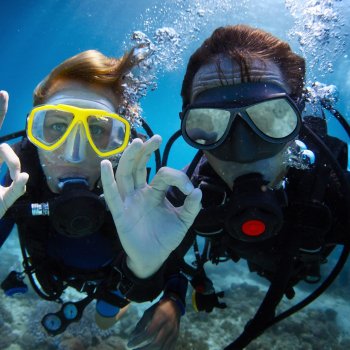
Diving: Discovering the Underwater World.
In this adventure post, we take you to the depths of the underwater world to discover an adventure sport that many people have been practicing for many years in our country: Diving. Diving or scuba diving involves swimming underwater with or without the help of oxygenation equipment. There are two ways to dive: Apnea, also known as free diving or breath-hold diving; and diving with equipment, called Scuba or tank diving. Photo: media4.letsbonus Diving Techniques: During the Apnea mode, dives are carried out while holding the breath naturally and without any special equipment; although some athletes use masks, fins, snorkels, and special suits to maintain stable body temperature. First, take a deep breath on the surface and immediately dive trying to reach the deepest point possible. Photo: parquetaguatagua While in Scuba diving, an oxygen tank is used by the diver during the submersion. In addition to the oxygen tank, the diver must also carry a buoyancy compensator, valve systems, a regulator, a depth gauge, and a pressure gauge to know how much oxygen is left. Photo: elparaisazul Necessary Equipment This equipment enables diving and its elements are: Mask This will protect your eyes and allow you to see underwater without any issues. In addition to covering the eyes, it also covers the nose; you can adjust it to fit your face to prevent water from entering. Photo: Scubapro Diving Suit The thermal suit helps protect the diver from hypothermia by insulating body heat. The body loses heat much faster in water immersion than in the air. Photo: Scubaprice Booties These neoprene "boots" protect the feet from cold and friction caused by fins. Photo: Scubapro Fins Fins allow for faster movement underwater and are usually made of rubber or other synthetic materials that provide transversal rigidity and longitudinal flexibility. There are different designs and blade hardnesses that enhance speed or power of movement underwater. Photo: Scubaprice Weight Belt The belt where the ballast or weight is attached is used to facilitate immersion and compensate for positive buoyancy. The closure system should be firm and secure but easy to release in case of emergency. Photo: Scubaprice Compressed Air Tank The tank contains compressed air and has a single opening where a control valve and coupling are attached. The valve controls the opening or closing of the tank. There are various types of tanks based on their capacity (from 5 to 18 liters) and the working pressure they can withstand (230 bars or 300 bars). Photo: espanol.diversdirect Discover the wonders of the underwater world and experience the adventure of diving into the depths of the unknown. See also: Alban Michon: Diving under the polar ice. Diving in Peru
4 Tips to Clean Your Mountain Boots
Mountain boots are one of the most important items for those who practice hiking and mountain or jungle sports. The toughness of the journey in the mountains depends on our boots. The boots must provide the adventurer with security, resistance, and comfort, which is why you must learn to clean them properly. Photo: www.ndparks. 1. You must let your boots dry completely. The best way is to leave them outdoors, making cleaning easier. Remember to remove the laces and insoles to wash them separately. You can use the washing machine or simply wash them by hand. Photo: wikihow 2. Remove all moisture inside your boots, a good method is to fill them with newspaper. Once dry, you can start removing mud, dirt, or any other debris with a brush. Photo: wikihow 3. In a bucket of warm water, add a tablespoon of liquid soap and dampen a towel with this mixture. Now, clean all areas of the exterior of the mountain shoes and let them dry outdoors. You can repeat this step until they are as clean as you desire. Photo: wikihow 4. At the end, you must let your boots dry either outdoors or in front of a fan. Touch the exterior and interior of the boot to ensure it is completely dry, and put back the insoles and laces. Photo: wikihow Recommendation: Store the boots in a box in a dry place. This will prevent the leather from deteriorating or rotting due to moisture. Photo: wikihow Keep your adventure gear clean and always ready so you can fully enjoy your trip. See also: Diving: Discovering the underwater world. What should I bring in my adventure backpack? The 11 best adventure mountains in Peru
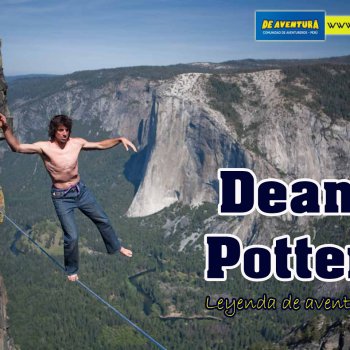
Dean Potter: Fly or Die.
He's not a bird, nor a plane, and certainly not a superhero, that man flying among mountains is called Dean Potter: American, climber, mountaineer, tightrope walker, jumper, highliner; a true extreme sportsman. Potter was born on January 18, 1972, and is globally known for his feats in adventure sports. Photo: cdn1.lockerdome. Dean grew up in New Hampshire, where he discovered his passion for climbing and made his first ascents. In Yosemite, precisely on the mountain "El Capitan," he established a new climbing route called "Easy Rider." Photo: eybl.at In 2006, he undertook one of his most controversial climbs. The chosen location was Delicate Arch in Utah, located in the midst of a religious area for the Navajo Indians. This caused great outrage among the population, who even dedicated the song "Not all roses" by rapper Odub to him. That day, Potter ascended in SOLO mode, without any assistance or additional equipment, a high-risk technique. Photo: parkerlab.bio.uci.edu Two years later, Potter made the highest Base Jump to date. The jump took place on the legendary Eiger Mountain (Switzerland) at 3970 meters high, ascending once again, without any assistance or safety gear. He covered 6.4 km in 2 minutes 50 seconds, the duration of his fall before opening his parachute. The magnitude of this feat led him to be named the Adventurer of the Year in 2009 by National Geographic. As expected, Potter wouldn't take long to surprise us with another great challenge. This time, he would cross the waterfall at Yosemite National Park on a tightrope (very similar to a 'tightrope'). By completing this challenge, he set the record for the longest traverse ever made on a rope at a height of 739 meters. Dean's latest adventure shared was his Base Bump jump accompanied by his dog Whisper, securely fastened in his backpack. After getting to know a bit about this adventure legend, it's worth remembering that adventure is not just about feeling the adrenaline rush through your body, but, as Potter says: "It's about enjoying all its beauty." Face your fears and start living a new adventure every day. See also: Slackline: The Aerial Acrobats Mike Horn: An Adventure Legend Adventures of the Adventurous Community