
Paracas: Adventure Sports and Tourism 2026
Paracas, a district in Pisco, Peru, is a regional reserve for migratory birds. It offers a variety of ecosystems, archaeological remains of the Paracas culture, adventure sports, and the National Reserve. With picturesque beaches and rich marine fauna, Paracas is a must-visit tourist destination in Peru.
Key facts about Paracas
| Ubicación | Pisco, Ica |
|---|---|
| Altitud | 5.00 m.s.n.m. |
| Clima | Desértico costero |
| Mejor época | Abril a Octubre (temporada seca) |
| Región natural | Costa |
Paracas is one of the 8 districts of the province of Pisco, and has been declared a regional reserve for migratory birds. In addition to its capital center, it has some populated centers such as La Guanera and Laguna Grande.
Paracas comes from the Quechua words: para (rain) and aco (sand), together meaning Paraaco “rain of sand”, which translates to Paracas in Spanish. The district covers an area of 335,000 hectares, of which 117,406 are land and 217,594 are marine waters.
Tourists can observe a variety of ecosystems, the archaeological remains of the Paracas culture, the place where the liberator San Martín disembarked, and a wide variety of birds and marine fauna found in the area.
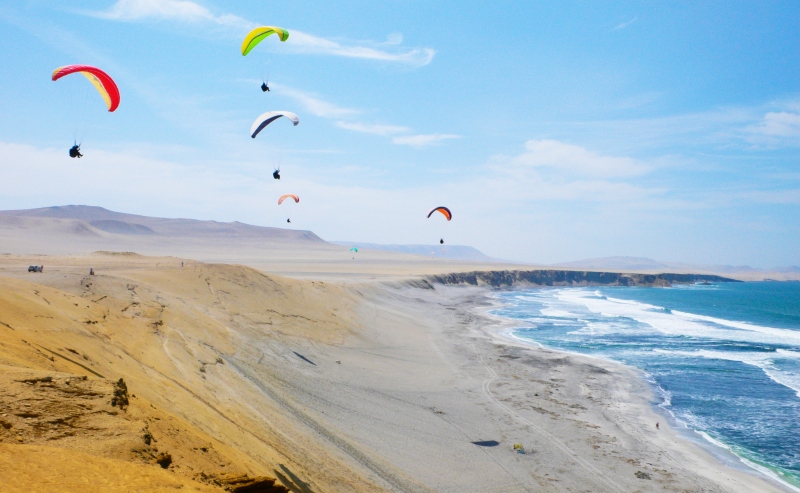
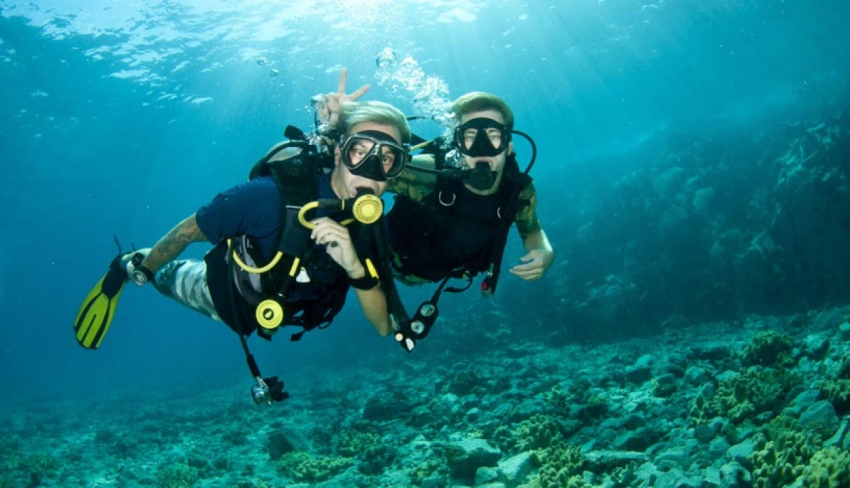
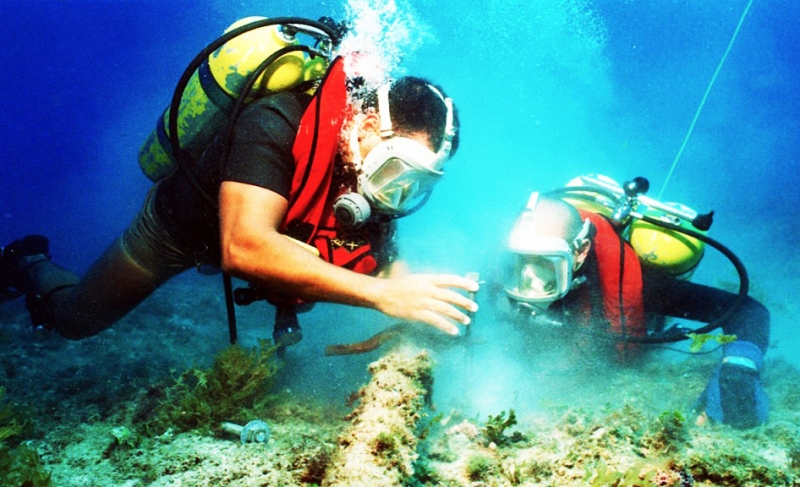
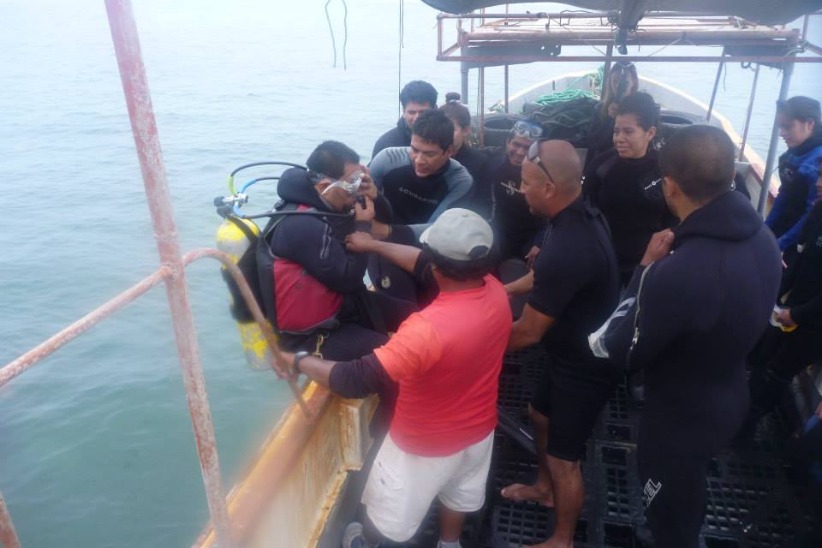
Being close to the sea makes Paracas a resort in the shape of a bay. The picturesque resort features cliffs, beaches, and beautiful buildings. It is also an ideal site for a variety of adventure sports, with popular activities including diving, paragliding, kayaking, surfing, mountain biking, and sandboarding. Other activities, although less popular, include off-road 4x4 and ATVs.
The area experiences strong sand-carrying winds that can reach speeds of over 50 kilometers per hour.
History
It was officially created by Law 11597 on March 8, 1951, during the presidency of Manuel A. Odría. However, its history dates back to the Pre-Inca period, when the Paracas were known as the men of sand. They settled in the bay and peninsula, engaging in fishing and weaving. Julio C. Tello indicates that they had two developmental periods: Funerary Caves and Great Necropolis.
Location of Paracas
Paracas is located in the province of Pisco, department of Ica, 261 km from Lima. According to Rebatta Parra, the terrain of the area is undulating with plains, hills, and sand dunes, and it has a coastline bathed by the Pacific Ocean from Chaco, lagunillas, Laguna Grande, and Otuma.
Climate and Temperature
Its average annual temperature is 22°C, with mostly sunny weather. It is a territory with strong sand-carrying air currents, known as paracas, which have an average speed of 25 km per hour and can reach up to 60 km per hour.
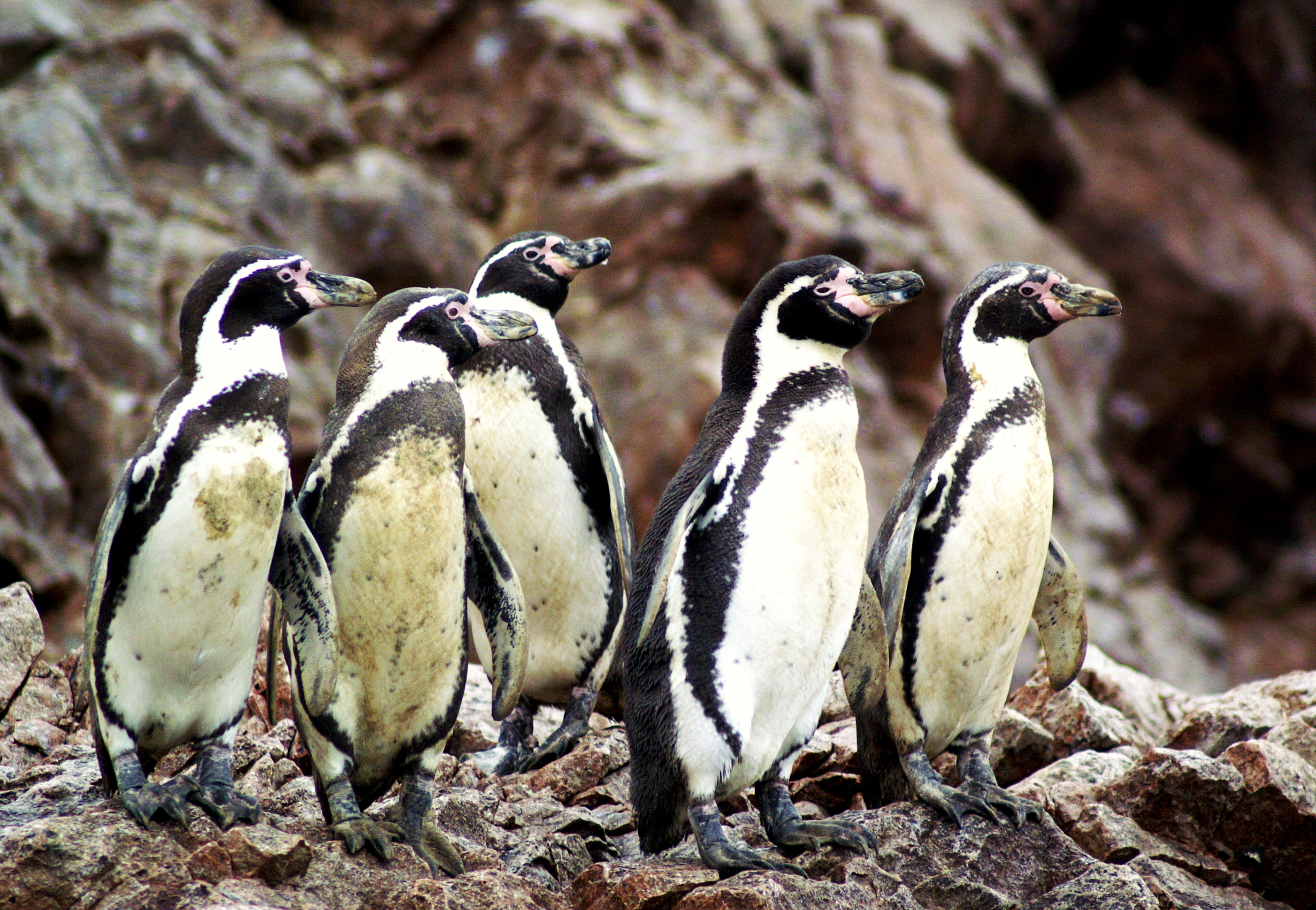
Photo: commons.wikimedia.org
How to Get to Paracas from Lima
The common way to reach Paracas is by land, about a 3 and a half hour bus ride. There is an airport in Pisco, but it does not have regular air traffic. To get to Paracas, you have to take the Panamericana Sur highway to kilometer 245, then take the west detour towards the city of Pisco, or the 614 detour before Pozo Santo coming from the north.
Adventure Sports
- Diving
- Paragliding
- Mountain Biking
- Surfing
- Sandboarding
- Kayaking
- ATV
- Off-Road
Video: luisperuhdsalsa
Paracas National Reserve
The reserve was created on September 25, 1975, with the purpose of protecting both the sea and the desert within its territory, as well as the variety of species that inhabit it. Near here, you can see the Candelabra, a very imposing geoglyph said to be related to those found in Nazca.
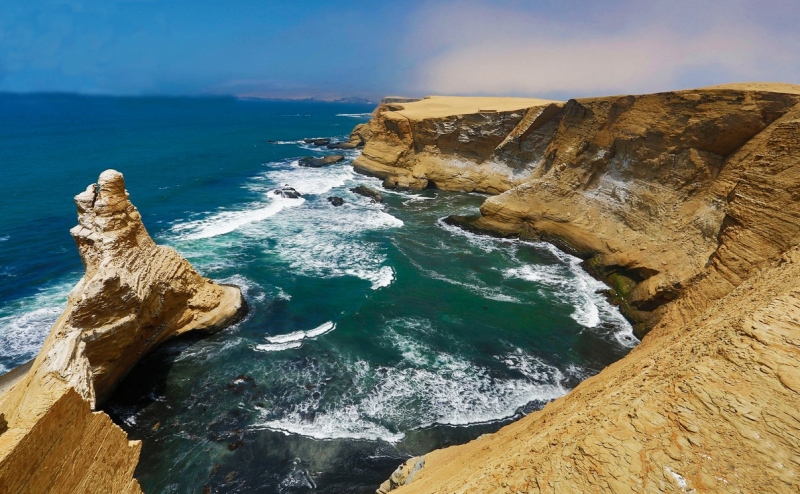
Previously, there was also the Cathedral, a large rock formation caused by erosion from the sea and wind over the centuries, where some sea lions and marine birds lived. Part of this great monument collapsed due to the violent 7.9 magnitude earthquake on August 15, 2007, with its epicenter in the sea.
The reserve is a great place for the conservation and peaceful reproduction of a variety of resident and migratory bird species, with the most abundant being pelicans, gray gulls, zarcillo, rayador, arctic tern, chuita, the Humboldt penguin (endangered), and the parihuanas.
In the marine area, there is also a wide variety of fish such as: legundo, white toyo, bonito, tramboyo, ray, chita, sardine, anchovy, pampanito, grouper, corvina, lorna, among many other species.
Among the mammals inhabiting the area are mainly sea lions, the fur seal, the pink dolphin, and the sea cat, the latter being endangered. Additionally, the reserve is home to leatherback and green turtles, lizards, geckos, octopuses, squid, the violet crab, the muimy, among other species.
Ballestas Islands of Paracas
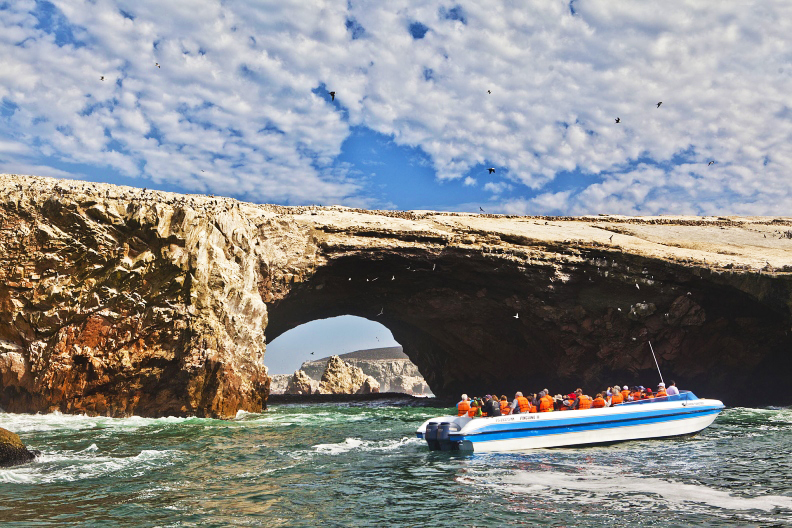
Located in the sea of Paracas, these islands can be visited by boat. The islands are formed by rocky formations where a large marine fauna can be observed, including guano birds such as the guanay, the Peruvian booby, and the zarcillo.
Here, there are also colonies of Humboldt penguins (endangered). Additionally, the islands are home to shelters for various types of sea lions that provide a marine show with their herd cries, giving the impression of being completely surrounded by them, a very unique auditory spectacle.
Visits to Paracas are commonly associated with trips to the center of Ica, Nazca, and definitely visiting the famous Nazca Lines. If you want to visit the district during festive seasons, we recommend going in June for the San Pedro Festival or in February for the Carnivals.
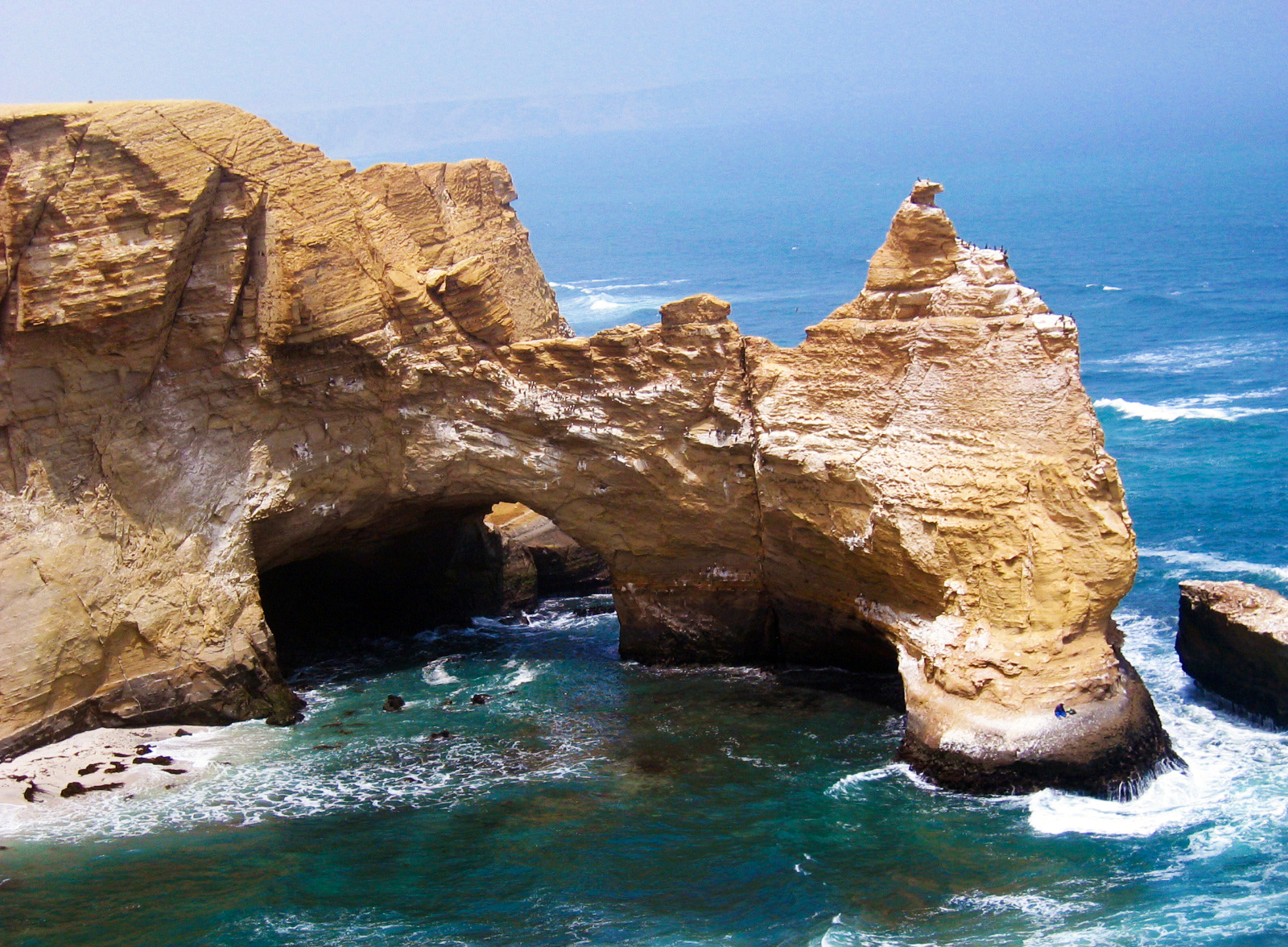
Photo: makitravel
Photos: trover.com - pixabay - viajesaparacas
Location and how to get to Paracas
Paracas is located in Pisco, Ica.
How to get to Paracas from Lima
The common way to get to Paracas is by land, about 3 and a half hours by bus. In Pisco there is an airport, but it does not have regular air traffic. To get to Paracas you have to go on the Panamericana Sur until kilometer 245, then take the west detour towards the city of Pisco, or the 614 detour before Pozo Santo coming from the north.
Map
Pisco, Ica
What adventure sports can you do in Paracas?
Adventure activities in Paracas

Photos of Paracas
📖 Adventure Stories
-
Diving in Paracas
Read adventure -
2015 Morón Oasis
Read adventure -
Hiking and Overnight Camping
Read adventure -
PISCO SUMMIT 5752 M
Read adventure -
Climbing the White Mountain Range in Peru
Read adventure -
VILLA RICA
Read adventure