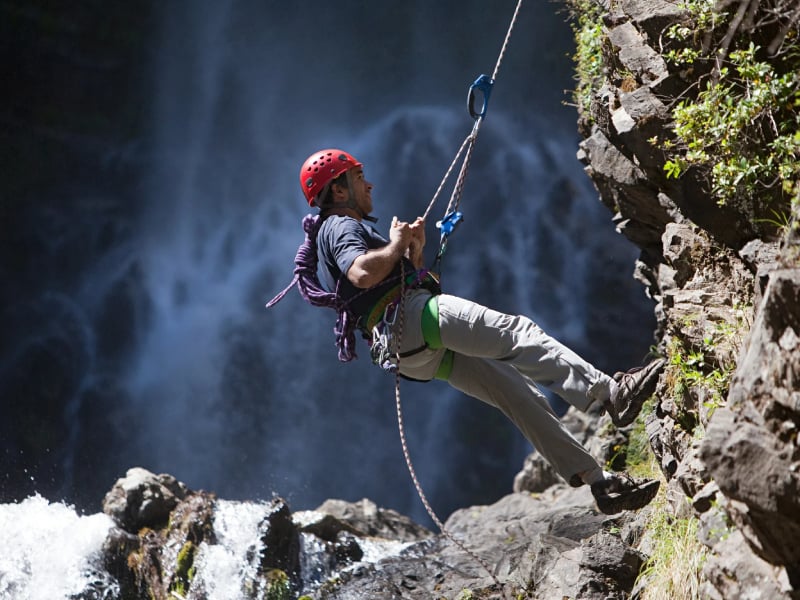
Rappelling is an adventure activity that involves descending a vertical wall with the help of a rope and a harness. It is a way to explore natural places in a different and fun way, but it also requires some preparation and caution. If you already have experience in rappelling, here are some tips and tricks that can help you improve your technique and enjoy this activity even more.
- Vary the type of rappelling: There are different modalities of rappelling, depending on the type of wall, the inclination, the height, the environment, etc. You can practice rappelling on rock, ice, waterfalls, caves, bridges, buildings, etc. Each of these options offers you a different challenge and a unique sensation. We recommend trying different types of rappelling to expand your skills and your enjoyment.
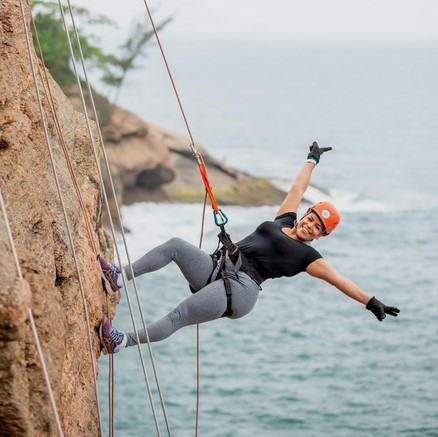
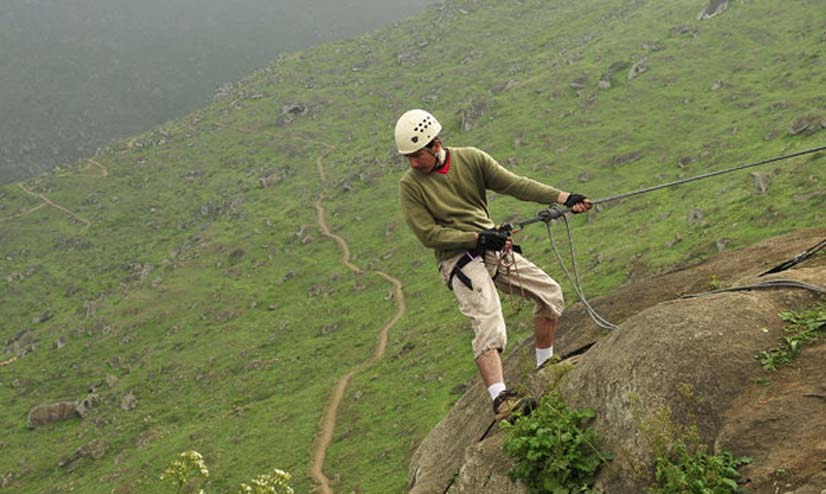
- Improve your body position: The position you adopt when rappelling is crucial to control the descent, avoid injuries, and enjoy the scenery. The ideal position allows you to maintain balance, stability, and visibility. Some tips to improve your position include: keeping your back straight, slightly bending your knees, separating your feet shoulder-width apart, pressing your feet against the wall, holding the rope with both hands, one above and one below the descender, and looking down to see the route.
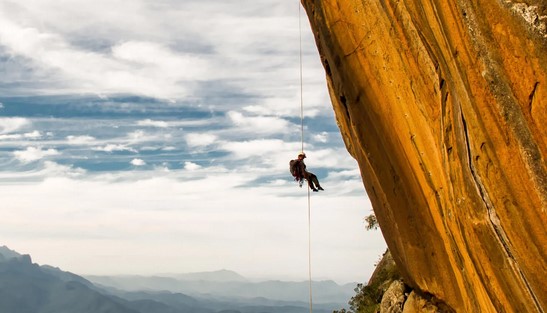
- Learn to overcome obstacles: In rappelling, you may encounter obstacles that hinder or prevent the descent, such as protrusions, cracks, vegetation, etc. To overcome them, you need to know how to change position, how to release the rope, how to use the anchor sling, how to tie emergency knots, etc. These techniques will allow you to navigate obstacles safely and efficiently.
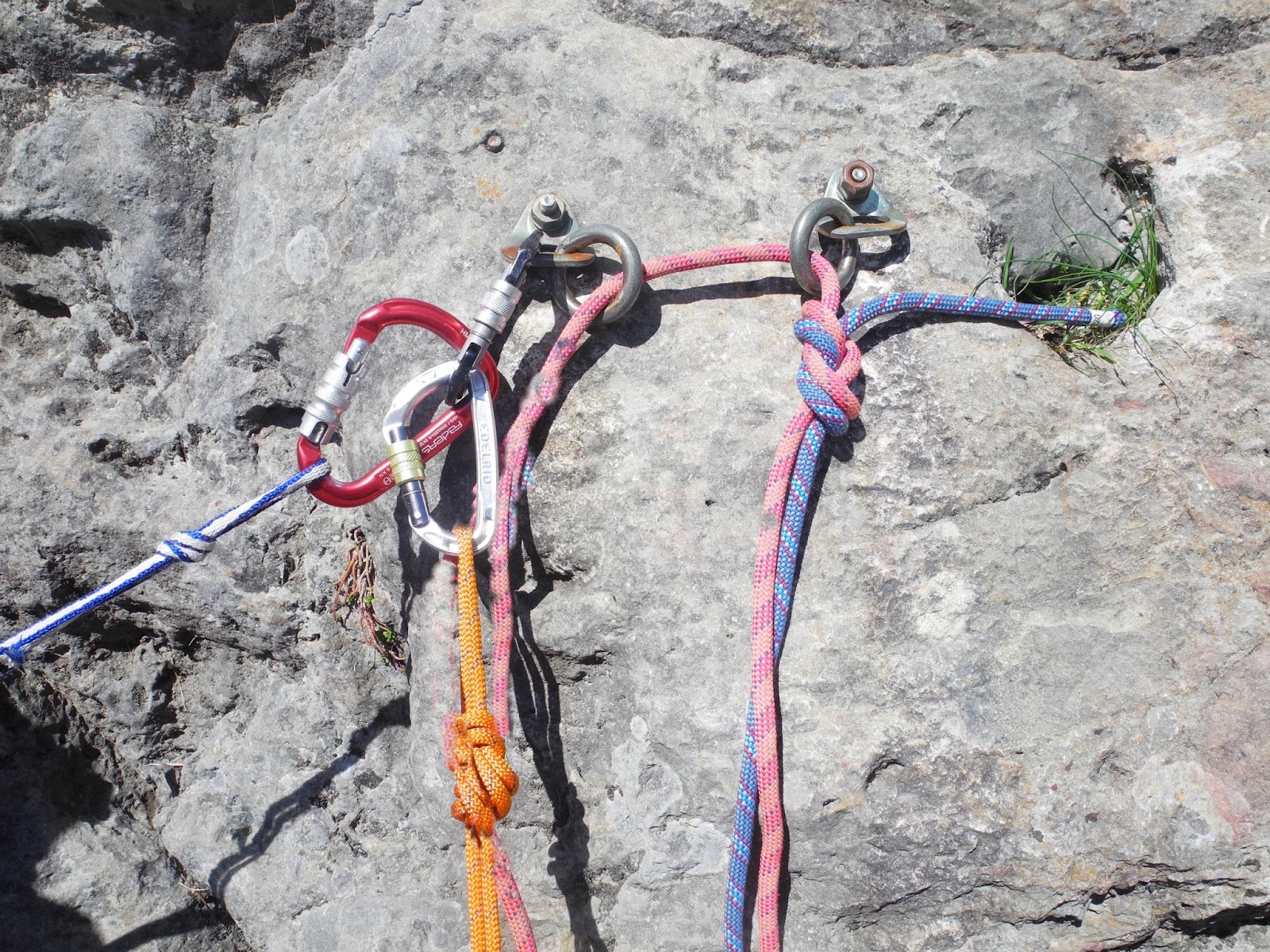
- Practice self-rescue: Rappelling is an activity that involves certain risks, so you must be prepared to face possible emergency situations, such as getting stuck, falling, losing the descender, etc. To do this, you need to learn how to perform self-rescue, which involves freeing yourself from the rappelling system and ascending the rope to a safe point. For self-rescue, you need a cord to make a self-locking knot, such as the prusik or machard, to allow you to ascend the rope, and a locking carabiner to secure yourself to the anchor.
Gear
In addition to the basic equipment you need for rappelling, such as the harness, descender, rope, carabiner, anchor, helmet, and gloves, there are other implements that can be useful if you already have experience in this activity:
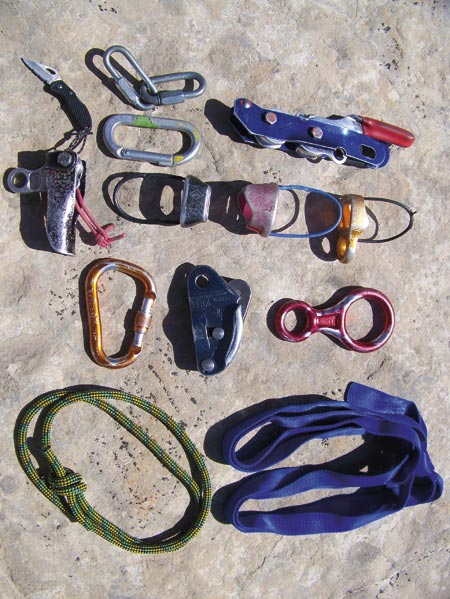
- Anchor sling or anchor leg: It is a rope or strap used to connect the harness to the anchor, allowing you to be secured to the rappelling system while preparing to descend. It is recommended for use in exposed places or places at risk of falling.
- Cord for prusik or machard: It is a thin rope used to make a self-locking knot, allowing you to ascend or descend the main rope. It is very useful for self-rescue, overcoming obstacles, or regulating descent speed.
- Sewn sling: It is a flat strap used to make a closed loop with a knot, allowing you to connect the harness to the descender, carabiner, or anchor. It is lighter and more flexible than a rope and can be used to make emergency knots.
- Auto-blocking descender: It is a device that allows you to control the descent on the rope and automatically locks if you release the rope or if there is a fall. It has a descent lever, an anti-panic system, and an error lock. It is the safest and most comfortable descender for rappelling, especially for beginners or long descents.
I hope this article has been helpful to you. By following these tips and tricks, you will be able to practice rappelling more safely and effectively. Enjoy rappelling!
Blog Author
DeAventura Team