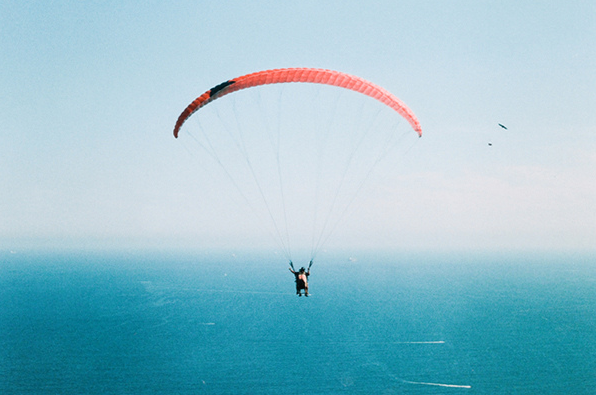
Paragliding is a flexible ultralight glider that does not need an engine to move, it harnesses the energy of gravity and air resistance to fly. It weighs less than the pilot who flies it and is flexible because it lacks rigid structures. Take off from the ground and join us on this new paragliding flight adventure, where you will feel like leaving your fears and problems behind.

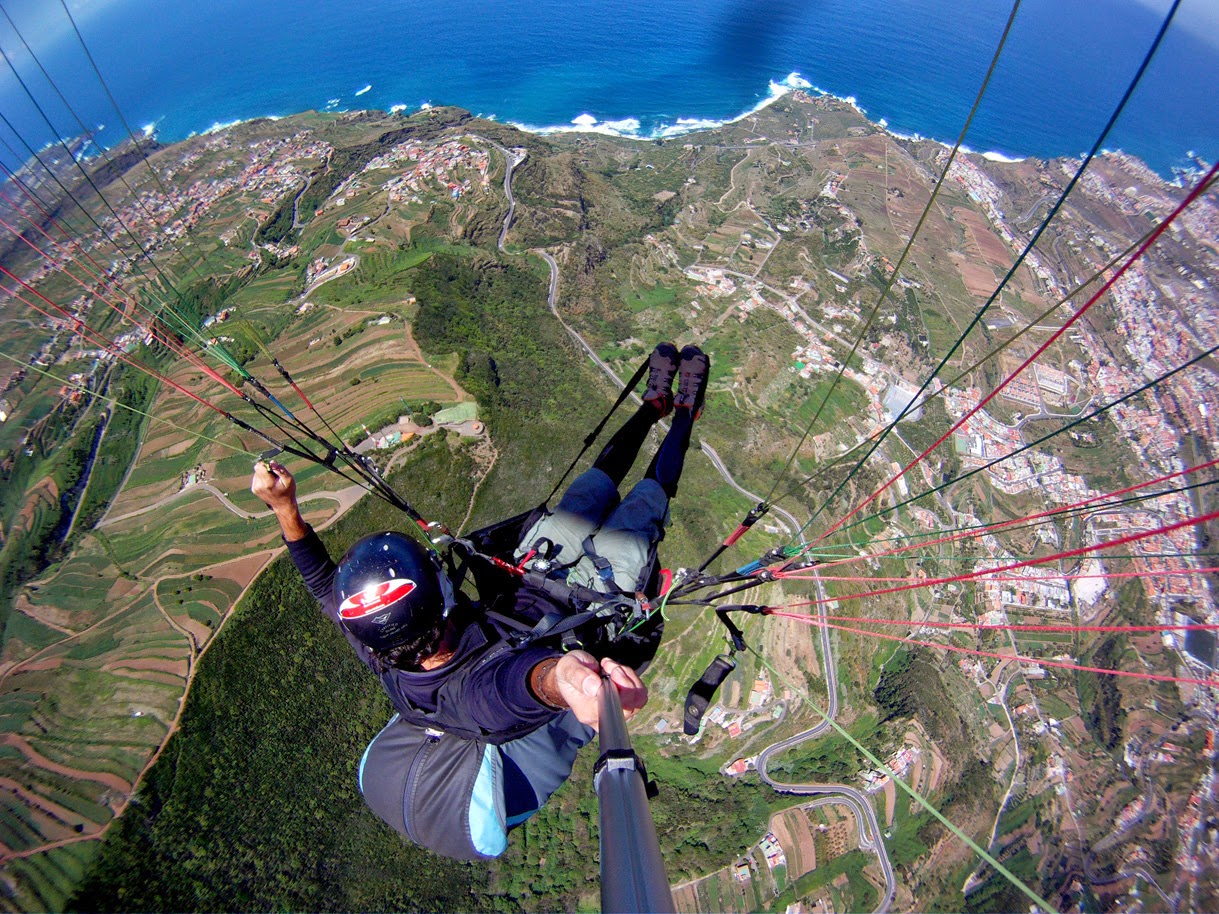 Photo: diariodelvalledelaorotava.blogspot
Paragliding Elements:
- The Wing: is what truly allows us to fly, it is a flexible structure made of several layers of fabric and a set of lines that give the fabric a wing shape. The wing has several parts that it's good to be familiar with: intrados, extrados, leading edge, trailing edge, stabilizers, ribs, cells or boxes, mouths or entry of the boxes.
- Lines: are a set of highly resistant straps that are connected on one side to the harness where the pilot sits, and on the other side they are attached to the suspension lines.
- Brakes: are the aerodynamic controls of the sail. They consist of a pair of lines that, when activated, can brake a part or both sides of the wing, and by shifting the body's center of gravity, we can steer the paraglider.
- Harness: is the element that keeps the pilot connected to the wing, preventing them from falling. It currently includes a series of passive safety elements such as foam plates, airbags, etc.
- Helmet and Boots: They are also part of the paragliding equipment, the helmet protects the aircraft's control center, and the boots serve as the landing gear.
- Radio, Barometer, Compass, GPS: are quite sophisticated flight instruments that allow us to significantly improve the duration and distance of our flights.
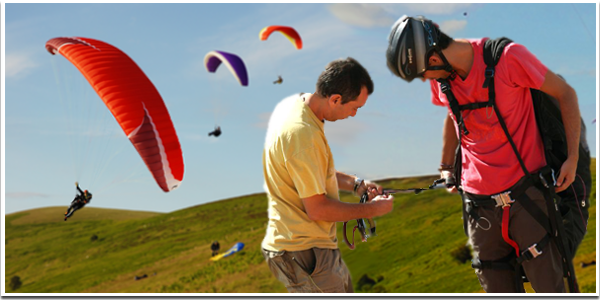 Photo: zero-gravity
Flight Phases:
- Equipment Preparation: One of the greatest advantages of paragliding is that the equipment preparation is very simple, just take the paraglider out of the bag, unfold it, check that the lines are not tangled, connect the lines to the harness, connect the accelerator, put on the helmet, boots, gloves, and flight suit, turn on the barometer and GPS, perform the pre-flight check, and you're ready to go.
- Takeoff: Once the equipment is prepared, and the atmospheric conditions are suitable, we position ourselves on the slope facing the wind, holding the brake and the corresponding A line with each hand. We give a firm pull, and when the wing is above our head, we can start running. Now we are flying, we can sit back and get comfortable.
- Flight: the flight phase is the simplest. Initially, we will focus on directing ourselves to the landing using the brakes to turn. As we gain more flight experience, we can start focusing on staying in the air longer by taking advantage of ridge winds and thermals.
- Landing: Once we are over the field, we exit the harness and let the wing gain speed by releasing the brakes. As we are about to touch down, we brake the wing, converting speed into altitude. With this slight climb, we lose all the speed we had and land gently.
- Packing Up: this is the most tedious phase of the flight, but it must be done so that everything is in place for the next flight without having to untangle lines and straps.
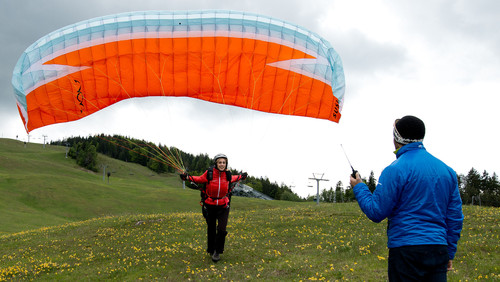 Photo: nova-wings
Now, set aside your fears and start flying with complete safety. It will be an unforgettable adventure.
See also:
- Feel Safe with Tandem Paragliding Flights
- Nothing Better than Paragliding over the Lima Coasts
- Speedriding: Combination of Paragliding and Skiing
- Flying on Paragliding over Patagonia
A
Blog Author
DeAventura Team