
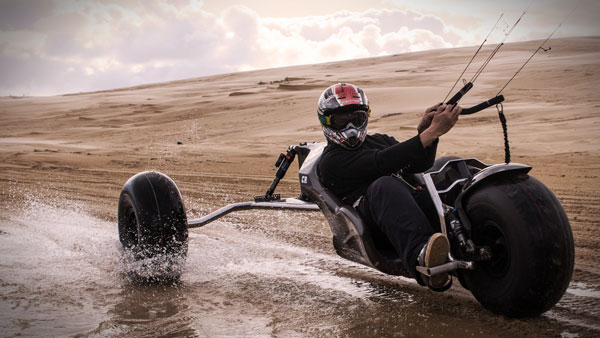
If you are passionate about adventure sports and speed, you won't want to miss practicing this new sport on wheels. We will go at full speed, propelled only by the wind and the resistance of a kite. So hold on tight and let's go full throttle on wheels in this new adventure post.
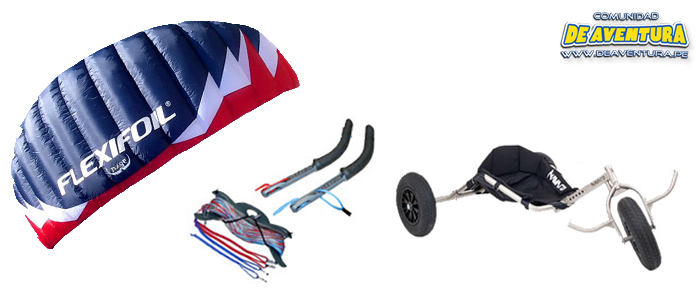 Buggy: It is a three-wheeled kart, similar to a tricycle but without handlebars. It is easy to disassemble and transport.
Similar to sails, they follow the same navigation process and vocabulary.
Buggy: It is a three-wheeled kart, similar to a tricycle but without handlebars. It is easy to disassemble and transport.
Similar to sails, they follow the same navigation process and vocabulary.

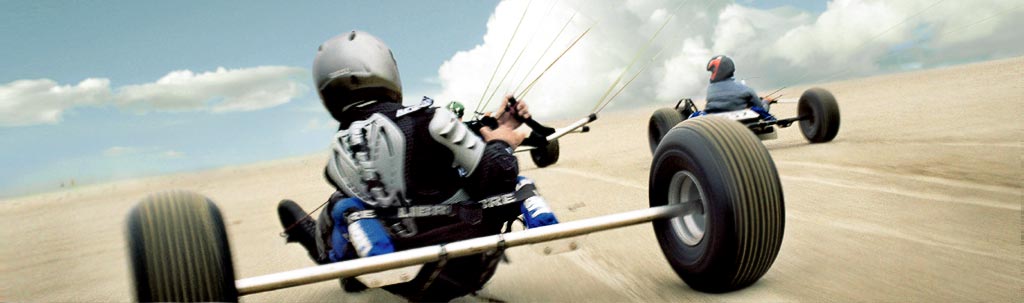 Photo: bmw.com
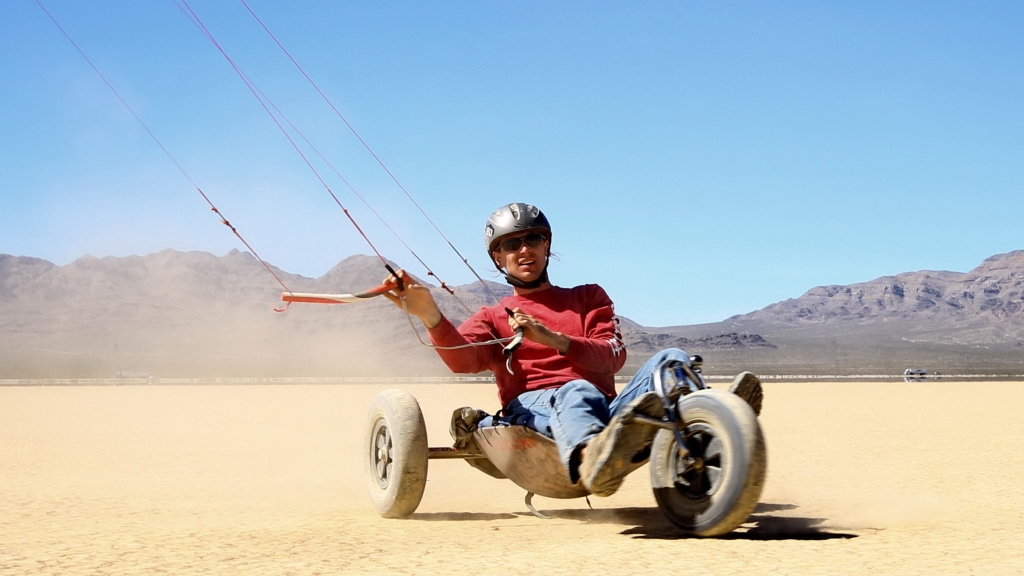 Photo: drachen.org
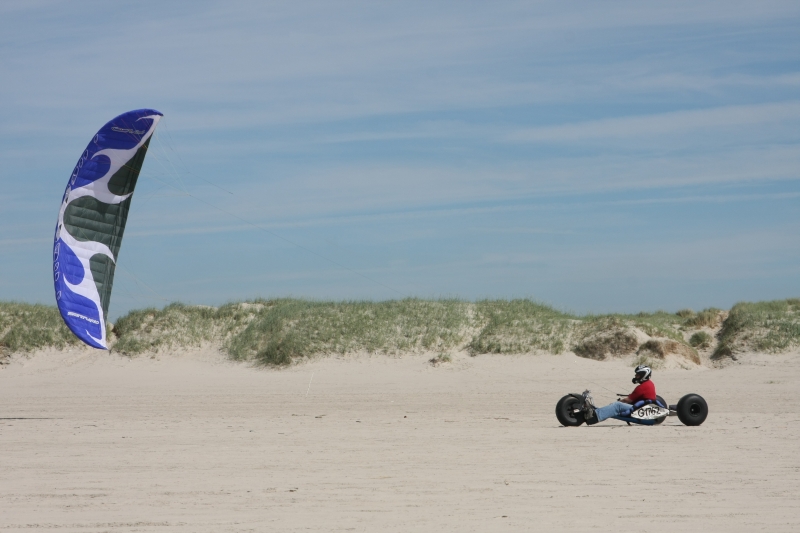 Photo: Blog.govalles.com
Components
Kite: It is a flexible aerodynamic sail or wing made of nylon fabric, making it lightweight and durable. The lines used for control are thin, typically 2 or 4 lines with lengths ranging from 15 to 30 meters. These lines connect the kite to the controls, of which each kite has two. One of the lines acts as a brake.
Buggy: It is a three-wheeled kart, similar to a tricycle but without handlebars. It is easy to disassemble and transport.
Similar to sails, they follow the same navigation process and vocabulary.
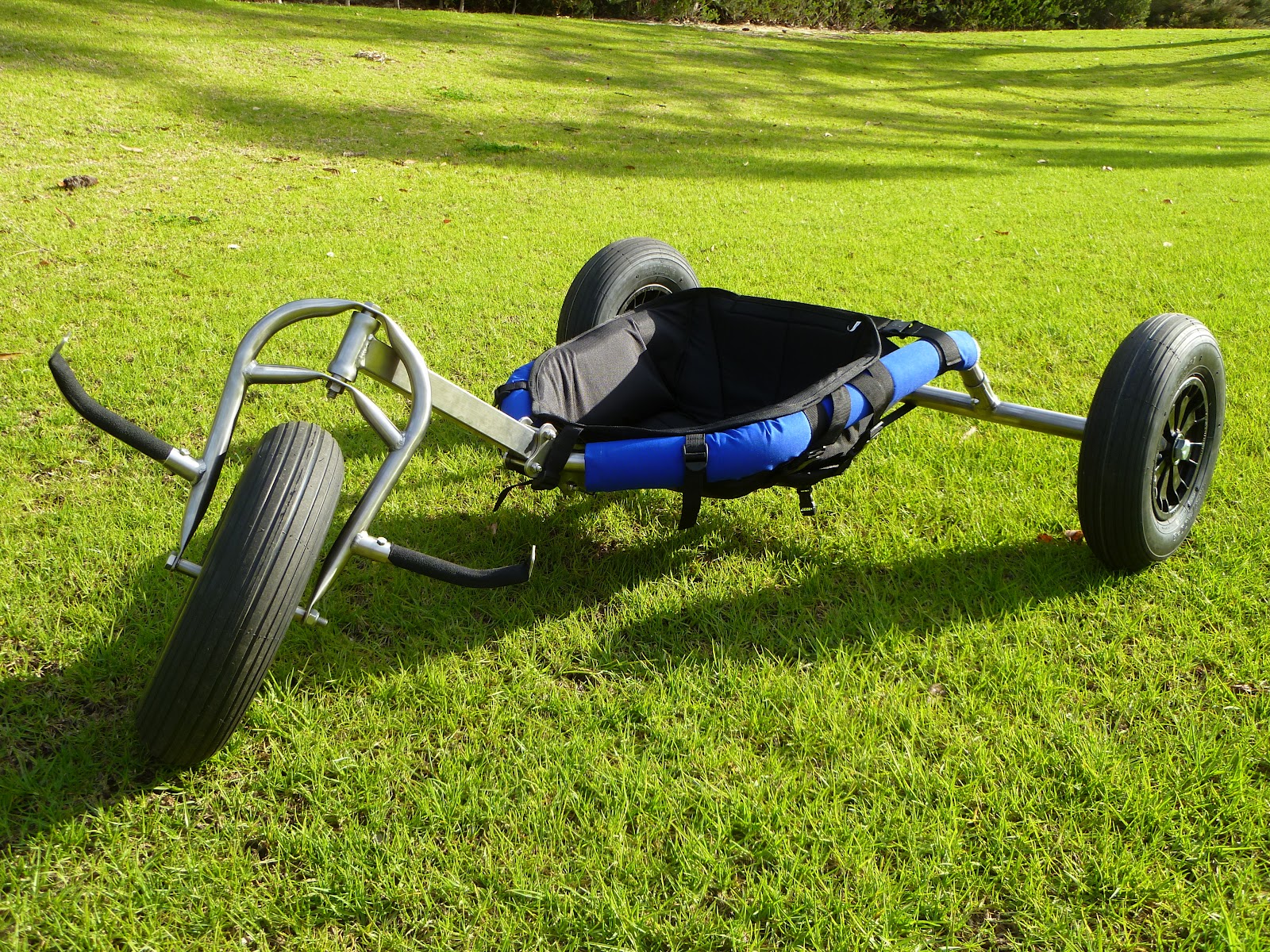 Photo: Baldiviskitebuggy.blogspot
A
Blog Author
DeAventura Team