

Despite it not being summertime, Peru is one of the few countries where you can enjoy good waves all year round. However, a bad surfboard could ruin all the fun. That's why it's always good to take advantage of these times of the year to renew equipment and boards in preparation for what lies ahead for the rest of the year. Learn how to choose a board that fits you in this Adventure post.
We always have a special connection with our first board, with it we rode our first waves, took our first wipeouts, bought new leashes and fins to 'pimp it out' a bit, and over time we got used to its shape, weight, and size. However, as Hector Lavoe says, "nothing lasts forever," and the time comes to change it for a board more suitable to our style and needs in the water.
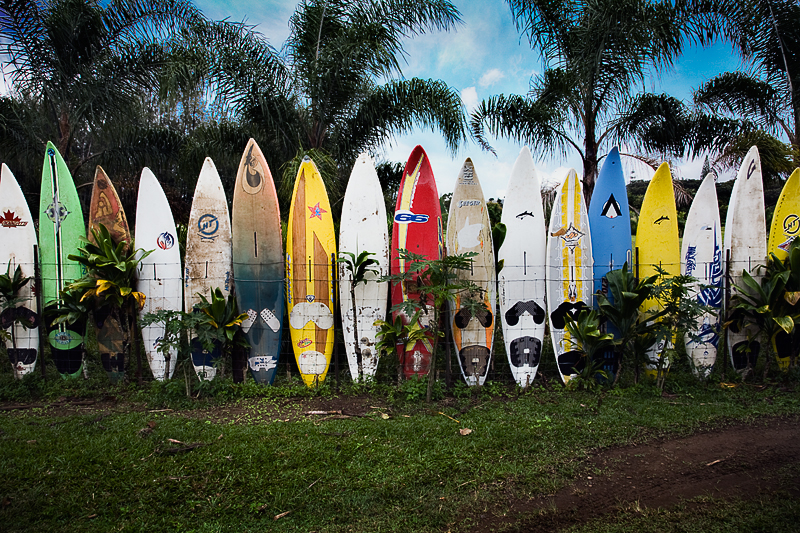 Photo: Boardsportunlimited
Now the big question: How do I choose the right board? What should it have? Many people are swayed by fashion and brands, but what really matters is feeling comfortable on it and finding the perfect balance between these 5 fundamental points:
- Thickness
This is high school physics, the thicker the board, the less control. A thick board will be harder to control on small waves where you might want to try new tricks that require better maneuverability. The thickest point should be in the center of the board and decrease towards the ends. Of course, this reduces buoyancy a bit, but if you use a wetsuit (neoprene) you don't need more.
If you still feel like a beginner, look for a board with a minimum of 2 ¾" to 3" inches, but if you're pulling off some tricks and want something more pro, look for between 2" and 2 5/8".
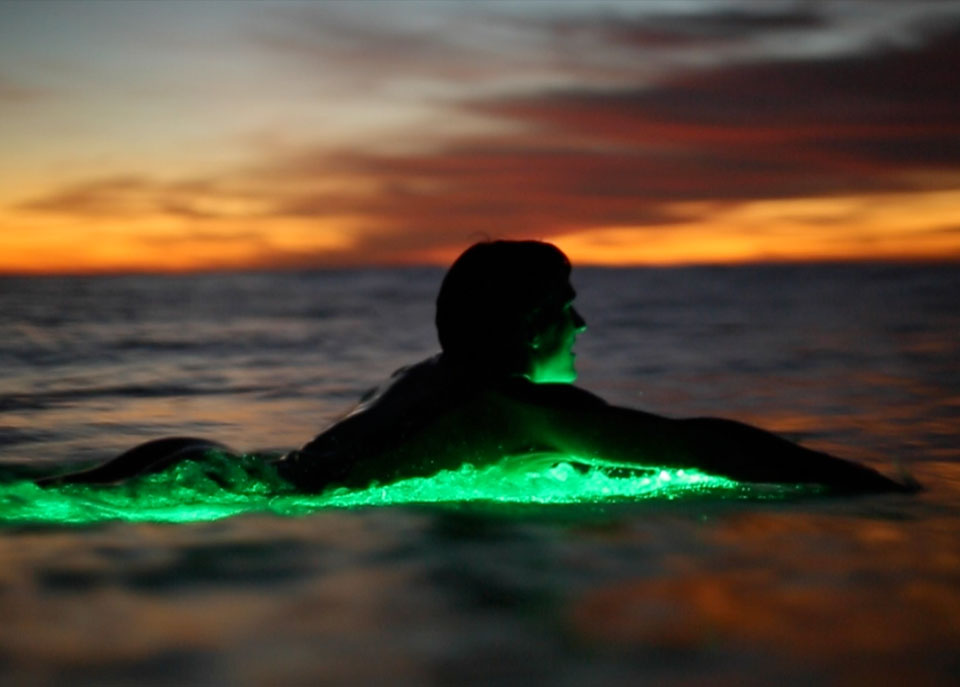 Photo: Pukasurf
- Width
Width equals stability, a narrow board allows for better movement and turns (obviously, it all depends on the surfer), while wider boards float better and are more stable, ideal for learning and surfing small waves. If you are of short stature, a narrow board will provide you with more speed and performance. Beginners can choose a board between 20" and 22"; for more advanced surfers, the width can range between 17" and 20".
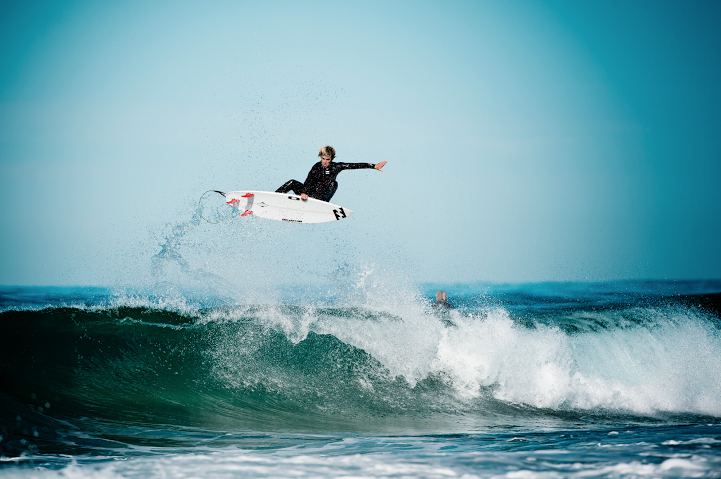 Photo: Latinwave
- Size
The length of a board will be one of the most influential factors when you get on it. It is true that we must identify what type of wave you are going to surf, but remember: Big waves, big boards. The benefit of a long board is paddling and traversing between sections of the wave. On the other hand, for small waves, small boards with greater maneuverability.
If you measure between 1.50 and 1.70, the appropriate board will be 5 to 6' (shortboards).
If you measure over 1.70, the ideal board will be 6 to 7' (shortboards).
If you also weigh more than 1.70, a board of 7 to 9' (longboards) is recommended.
 Photo: Itespresso
- Shape and Style
The shape of your board reflects the style you practice and the waves you face. There are many types of boards, but the most popular ones are:
Tow-in: Special boards for being towed by a jet ski.
Fish: Boards designed for small and weak waves.
Shortboard: The most common boards with a more evolved design.
Evolutionary: Large and thick boards perfect for beginners.
Malibu: Large boards with a round tip similar to longboards.
Gun: Boards with sharp tip and tail, special for big waves.
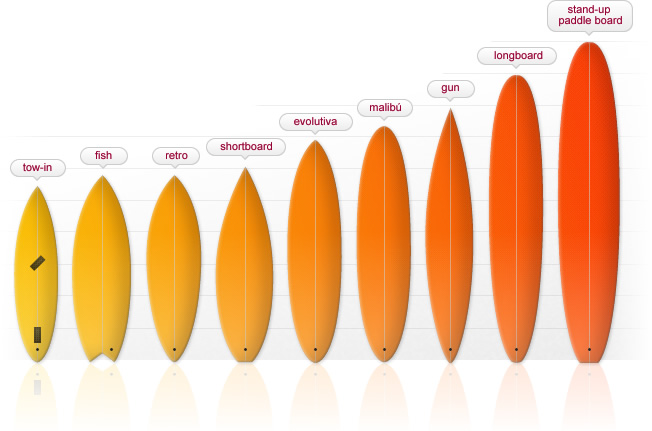 Photo: Surflife
- Color
Not everything is about numbers and measurements, surfing is a sport full of life and energy, but many surfers use white boards covered in stickers. Break the monotony and add a touch of personality to your board and go out to ride the waves. Make your board and your talent stand out on the waves. Now all that's left is to go out, find your board, put on your wetsuit, and hit the waves, because Peru is a powerhouse in this sport and as we said at the beginning, you can have good waves all year round.
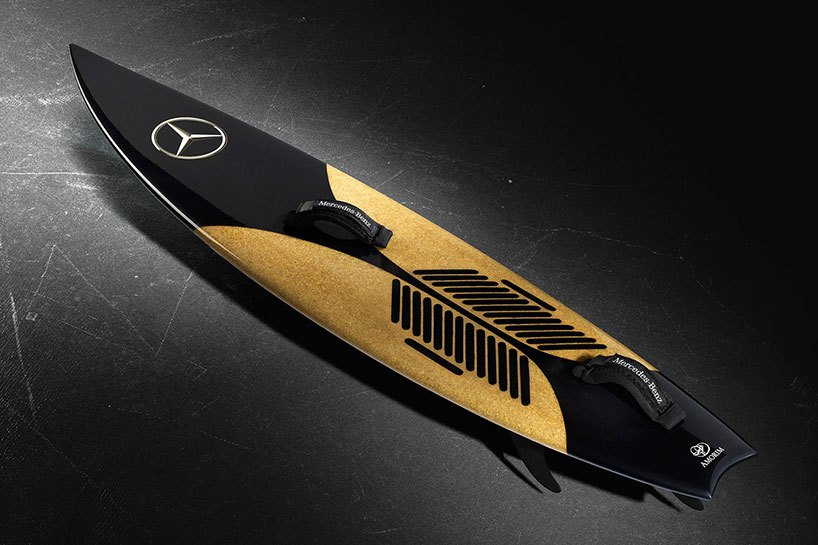 Photo: Taringa
Blog Author
DeAventura Team